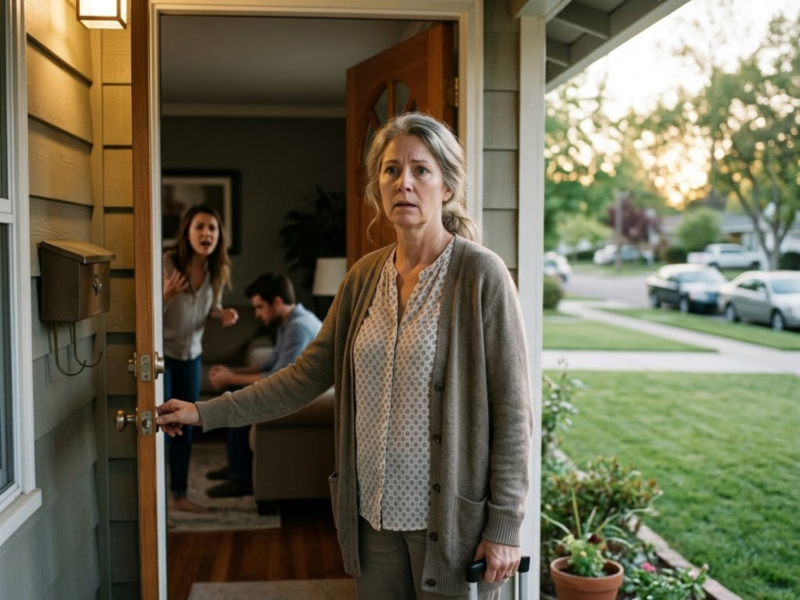
(Part 2) My Daughter-in-Law Said, “You Need to Leave Before My Parents Arrive”—So I Changed the Locks Instead
(Part 2) My Daughter-in-Law Said, “You Need to Leave Before My Parents Arrive”—So I Changed the Locks Instead
.
.
Helen Vance stood in the sunlit living room with the envelope still warm from her fingers.
A single line had been enough to make her stomach tighten—not with fear, but with recognition.
We’re not finished.
Heather’s handwriting was tidy, controlled, as if the ink itself had been trained to behave. Helen could almost see Heather’s posture as she wrote it: chin slightly raised, expression sharpened into victory, the kind of person who treated setbacks like delays rather than endings.
Helen set the envelope down carefully on the coffee table, smoothing the paper once, twice—an old habit from her library years when she wanted order to exist even if the world didn’t.
The house was still.
No slamming doors. No Heather’s watch-adjusting gestures. No harsh phone calls turning hallways into stages. The only sound was the grandfather clock ticking in the hallway and the distant whisper of the tide against the rocks below.
Still, Helen couldn’t allow herself the softness of thinking it was over.
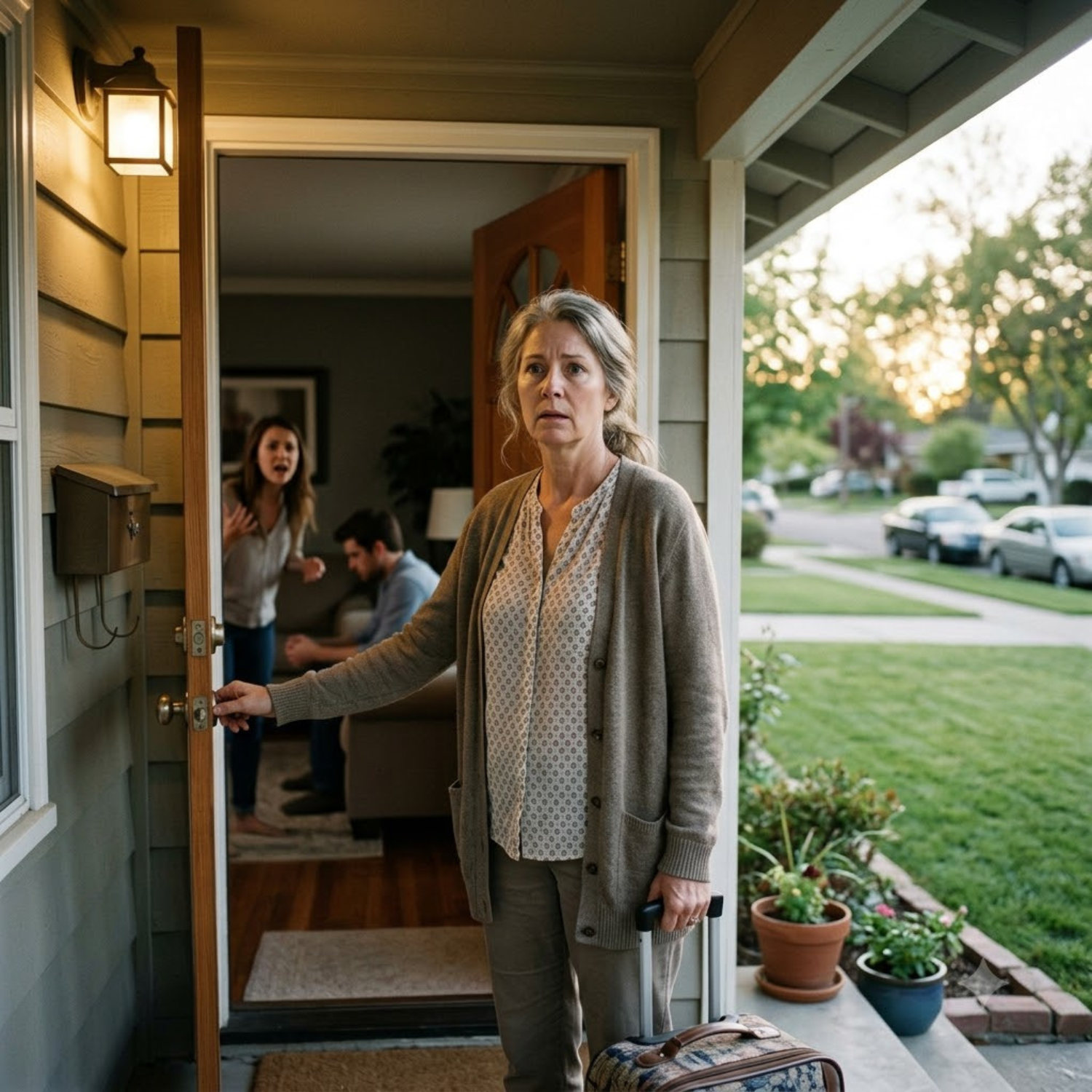
When someone used boundaries like tools, they didn’t accept boundaries like rules. They accepted them only if they could reshape them.
Helen walked to the kitchen and poured another cup of Earl Grey. She didn’t open her book. She just held the tea and listened—to silence, to her own breathing, to the slight creak of the house settling around her.
Two weeks ago, she’d watched Heather’s face freeze when the keypad stayed red. She’d watched Julian realize—too late—that his passivity had given Heather permission to believe she could rewrite reality.
But Heather had pride. And pride, Helen knew, turns every loss into a negotiation.
She turned toward the hall.
The secure cedar chest in her office had remained locked. Her grandmother’s silver and her private journals were still exactly where they should be. Her documents—deed copies, legal papers, years of careful organization—were safe.
The security work order Arthur had done—commercial-grade keypad deadbolts on every exterior entrance—was also safe.
Helen wasn’t worried about the house.
She was worried about the plan.
Because Heather had tried to control occupancy. Now, the message suggested a next step: legal pressure, emotional leverage, or some other attempt to drag Helen into a conflict she would have to manage instead of merely decide.
Helen went upstairs and opened her locked office cabinet. She pulled out a folder she hadn’t needed until now. Inside were copies of everything: the deed, the notice to vacate, the locksmith invoice, and the written record Helen had started keeping the moment Heather’s “temporary” takeover began.
There were dates and notes.
Heather had rearranged cabinets on March 3rd. Heather had insisted Helen relocate reading materials on April 11th. Heather’s statements about “authority” appeared in Helen’s journal on May 26th. Arthur’s installation date had been recorded for continuity. Julian’s admission—it’s her house—had been written down with the exact time she’d overheard it, as if memory could become evidence.
Helen had learned in school libraries: documents don’t argue. They outlast.
Now she added another item to the folder: the envelope.
When she finished, she sat at her desk and stared at the wall until her thoughts stopped sprinting.
Then she moved again—methodical, calm, practical.
First, she checked her contact list and saved Arthur’s number under “Security—Aftercare.” She sent him a text: Thank you. Any chance of a service check? I’d like the systems audited this week.
Arthur replied within minutes: On it. Your area lockups will hold, Helen. But if someone’s tampered or tried to brute-force codes, we’ll know. Bring it in.
Second, Helen contacted her legal counsel.
Not to sue. Not yet.
To ask how to protect herself from the kind of “we’re not finished” that meant harassment, threats, or attempts to exploit sympathy.
Her lawyer was a busy woman who spoke efficiently, as if every second mattered.
“I got an envelope,” Helen told her. “No return address. No stamp. Just a threat implying escalation.”
“What form are you expecting?” the lawyer asked.
Helen hesitated only long enough to be honest.
“Financial manipulation,” she said. “Or a claim disguised as concern. Or… pressure with witnesses.”
The lawyer made a sound that wasn’t quite a sigh—more like understanding.
“Given sole title and no lease,” the lawyer said, “you’ve done everything properly. But people like Heather sometimes escalate emotionally before they escalate legally. Keep everything documented. No contact unless it’s necessary. And—Helen—do not remove anything you packed onto the porch. Do not re-offer what you already reclaimed.”
Helen’s eyes went to the window where her front bay glowed with afternoon light. The side porch was still tidy, still locked.
“I won’t,” Helen said.
Then she added, quietly: “I want to remain peaceful.”
“Peace is not surrender,” the lawyer replied. “It’s strategy.”
Helen ended the call and stood by the door for a moment, listening to the house.
At first, the silence felt like a blessing.
Then it started to feel like a countdown.
On the third day after the eviction, Helen heard a car slow down near the driveway.
It wasn’t dramatic. It wasn’t a confrontation. It was a pause as if someone were deciding whether to approach.
Helen looked through her front window.
A familiar SUV rolled into view—Heather’s.
Helen didn’t move immediately. She watched Heather park at an angle that suggested she wasn’t sure she’d be welcome. Heather stepped out and carried a folder and a garment bag, as though she intended to drop something off.
Heather didn’t come up the steps right away.
She stood near the driveway and checked her phone. Then she walked along the side path—slowly—until she reached the covered side porch where Helen had stacked Heather’s belongings on elevated pallets.
The moment Helen saw that, her jaw tightened.
Heather wasn’t just arriving.
Heather was staging.
Helen opened her front door and stepped out into the sunlight.
“Heather,” Helen called, voice clear.
Heather looked up quickly. For a second, the practiced poise returned to her face—the kind that had told everyone she was the victim right up until the lock failed.
But when Heather saw Helen standing outside, she stopped smiling.
“What are you doing here?” Helen asked.
Heather lifted her chin. “I came to retrieve some items you moved.”
Helen stepped forward, staying on her side of the boundary—not threatening, just present.
“I moved your belongings because you were told to leave,” Helen said. “Those items were never destroyed. They’re on the porch.”
Heather’s eyes flashed.
“I didn’t ask about everything,” Heather said, forcing a softness into her voice that didn’t match her eyes. “There are some personal things—jewelry, paperwork. I need my medication instructions. I have health—”
Helen waited. She didn’t interrupt. She let Heather build her case in real time.
Finally, Heather turned toward the porch door.
“I’d like access,” Heather said. “You should let us speak calmly. There’s no need for this… hostility.”
Helen’s gaze dropped to Heather’s folder. Something about the way it was held suggested documents—not medication.
“I’m willing to speak calmly,” Helen said. “But access codes are revoked. If you need to retrieve items, it will be under supervision.”
Heather’s face tightened. “Supervision? You think I’m stealing from you?”
Helen’s voice stayed even.
“I think you are escalating threats,” Helen replied. “And I think your definition of cooperation differs from mine.”
Heather opened her mouth to argue.
Before she could, Helen added, “Arthur is coming this week to audit the system. If there’s any issue, he can confirm logs. And if you attempt to enter without permission, I will treat it as trespass.”
Heather froze.
For a moment, Heather looked like the version of herself she had been at the porch—fury replaced by confusion.
Then Heather snapped, “Julian said you were trying to punish me. He said you—”
Heather stopped herself, as if even she realized she wasn’t supposed to claim things she couldn’t prove.
Helen waited again, letting the silence expose Heather’s discomfort.
Heather’s shoulders rose and fell. Finally, Heather said, lower, “My parents have concerns. They’re talking about what happened. They’re saying you humiliated us.”
Helen almost smiled, but she didn’t. Humor felt too indulgent for the situation.
“You were not humiliated by your lock being disabled,” Helen said. “You were humiliated by the reality that my home is not yours.”
Heather’s face reddened.
“You can’t just decide everything,” Heather insisted. “After all this time—after we lived here—you can’t—”
Helen cut in gently but firmly.
“We lived in my home,” she corrected. “I did not become landlord because you treated me like one.”
Heather stood in the sunlight like a woman who had expected the door to open itself.
Then Heather lifted her folder and, with a sharp motion, turned it toward Helen as if showing proof to a judge.
“I brought something,” Heather said. “A proposal. A settlement.”
Helen didn’t reach for the folder.
“What kind of settlement?” Helen asked.
Heather’s voice took on that dangerous tone—one designed to sound reasonable while it planted fear.
“You’re going to have to pay relocation costs,” Heather said. “You forced us out. You know how expensive apartments are. My parents—”
Helen’s eyes narrowed slightly.
“My parents are not your justification,” Helen said. “And your relocation costs are not my responsibility.”
Heather scoffed. “You think you’re in control because you hired a locksmith and changed your locks. But there are rules.”
“There are rules,” Helen agreed. “And I followed them.”
Heather leaned forward slightly, as if she were trying to intimidate through closeness.
“You think you can keep us out forever?” Heather whispered.
Helen didn’t flinch.
“No,” Helen said. “I think I can keep you out until you stop acting like my property is negotiable.”
Heather stared at her for a long moment, then glanced down at the porch door again.
The silence that followed felt heavy.
Finally, Heather said, “I’ll come back with my attorney.”
Helen’s response was immediate, calm, and almost disappointing to Heather.
“Send the letter to my counsel,” Helen said. “I will respond through proper channels.”
Heather looked as if she couldn’t decide whether to rage or laugh.
“You’re cold,” Heather accused.
Helen stepped back slightly, allowing the boundary to remain visible even without a physical barrier.
“I’m clear,” Helen corrected. “There’s a difference.”
Heather spun on her heel and returned to her SUV.
She didn’t shout this time.
She just drove away, leaving Helen with the unpleasant certainty that Heather would keep returning—not to apologize, but to apply pressure in new forms.
Helen went inside and locked the door. Then she texted Arthur: Please audit the system and check logs if possible. Concerned about unauthorized access attempts.
A few hours later, Arthur replied: Sure thing. I’ll look at the keypad history and door events.
That evening, Helen made dinner for herself. She sat at her table and ate slowly, listening to the house. No drama. No waiting for someone to knock.
Still, when she washed her plate, her eyes went to the coffee table where the envelope had been.
“We’re not finished.”
Helen picked it up again.
Then she did something Heather wouldn’t have expected: she wrote her own message in her notebook.
Not a threat. Not an argument.
Just a record.
Date received. Time. Content.
And then, underneath, Helen wrote:
Boundaries are not punishments. They are protection.
The next week brought a letter.
Not an envelope left on the coffee table.
A formal document arrived in the mail—stamped, addressed, delivered.
Helen didn’t open it right away. She took a breath first. That old school-bred control: don’t react impulsively; read.
When she finally opened the letter, her eyes scanned quickly.
It was a demand for “reconsideration of occupancy decisions,” written in careful language that tried to make Helen sound unreasonable. There were claims that Heather had “reasonable expectations” of continued residence. There were hints that Julian had been “dependent” on the home for stability.
There was nothing legally substantial—because sole ownership didn’t vanish just because someone wrote dramatic paragraphs.
But Heather hadn’t come empty-handed.
Heather had hired an attorney, at least enough to make the paperwork look official. Helen could see how Heather intended to play it: not with immediate entry, but with prolonged discomfort. With delays. With the hope that Helen would grow tired before the process ended.
Helen took the letter to her counsel.
Her lawyer read it silently, then looked up.
“They’re trying to create a narrative,” the lawyer said. “Not a strong legal claim. But it’s enough to cost time and emotional energy.”
“I won’t give them the energy,” Helen said.
Her lawyer nodded. “Good.”
“Keep everything documented,” Helen added.
The lawyer smiled faintly. “You already have.”
That was when Helen realized the most dangerous part of Heather’s plan wasn’t the lawsuit threat.
It was the possibility that Helen would start treating her home like a courtroom instead of a refuge.
And Helen refused.
So she did what she always did when she couldn’t stop other people from talking.
She focused on structure.
She scheduled Arthur’s audit for the following day.
She updated her own codes—master and restricted ones. She ensured every exterior entry had functioning logging. She placed a small camera display inside her office that would show door events without broadcasting anything to the household.
Then, on a quiet afternoon, she drove into town.
Not to see Julian. Not to plead. Not to soften.
She visited the library where she’d once worked.
The building smelled like paper and dust and quiet. It was a place where stories were created, where rules were clear, where boundaries existed because knowledge required it.
Helen asked the librarian clerk for a volunteer form.
The clerk blinked. “Mrs. Vance? You don’t have to—”
“I want to volunteer,” Helen said. “I want to do something that keeps me busy and useful.”
The clerk’s eyes softened. “We’d love that.”
Helen’s heart loosened a fraction.
It wasn’t that she forgot Heather.
It was that she stopped letting Heather be the only storyline in her life.
On the following Monday, Arthur arrived at the crack of morning.
His truck parked. His tools unloaded. He checked the keypads like a man verifying a promise.
“You’ve got clean logs,” Arthur reported after examining the systems. “No brute-force tampering. No successful entry attempts. Your security holds.”
Helen felt a quiet relief settle into her chest.
“That’s good,” she said.
Arthur paused, then added, “But there’s something else.”
He handed Helen a printout.
Door event records. Time stamps. Failed access attempts.
And one item stood out: a set of attempts that matched Heather’s arrival schedule the previous week.
Heather had tried.
Not to enter successfully—Helen already knew she wouldn’t get far with the new codes—but to test, to poke, to push the boundary and see if she could make Helen back down.
Arthur pointed to the timestamp.
“That’s the day she was outside your side porch,” he said.
Helen looked at the printout. Her jaw tightened, then steadied.
“Thank you, Arthur,” she said. “Keep this in my file.”
Arthur nodded. “I will.”
He left soon after.
Helen returned inside and locked the door behind her.
She didn’t feel triumph.
She felt preparedness.
And preparedness, Helen learned, could be its own kind of peace.
That evening, her phone rang.
A number Helen recognized.
Julian.
Helen answered with a calm voice that surprised her even now.
“Julian,” she said.
“M-mom,” Julian began. He sounded tired—tired in a way that meant he’d been carrying responsibility on his shoulders for too long. “Heather’s… asking for another meeting. Her attorney’s requesting mediation.”
Helen didn’t speak immediately.
She let Julian breathe. She listened to the fear underneath his words—not fear of legal consequences, but fear of conflict, fear of telling Heather no and watching her rage.
Finally, Helen said, “Do you want mediation?”
Julian hesitated.
“I… I don’t know,” he admitted. “Heather says if we don’t do it, she’ll—she’ll make things worse for you. She says you’ll regret not cooperating.”
Helen closed her eyes for a moment.
This was the real war now: not a fight for a house, but a fight for which narrative would control Julian’s future.
Helen’s voice softened slightly.
“I’m not refusing to be heard, Julian,” she said. “But I won’t negotiate ownership. You and Heather are not residents. That’s final.”
Julian swallowed audibly.
“What should I do?” he asked.
Helen didn’t give him permission to evade. She gave him direction.
“Tell your wife to send any proposals to my counsel,” Helen said. “And tell her you will not keep sacrificing yourself to keep her comfortable.”
Julian was silent.
Then he whispered, “I’m trying to stop.”
Helen exhaled.
“I know,” she said. “That’s why you called. I hear the difference.”
Julian made a sound that might have been a sob, might have been relief.
“I’ll attend counseling,” he said. “I’ll come by if you want to talk.”
Helen looked around her living room—the clean air, the stable light, the absence of boxes lined up near her bedroom door.
“I do want to talk,” Helen said. “But not in the way Heather wants.”
Julian’s voice steadied. “Okay.”
They ended the call.
Helen hung up and stood quietly for a moment.
Her house was hers.
Her peace was hers.
But she still wasn’t naïve. Heather would keep trying until she learned that no could be final.
Helen returned to her chair by the front bay window and opened her novel again.
This time she didn’t try to rush through the pages.
Outside, the coastal breeze moved through pines like a slow, steady exhale. The tide kept whispering. The grandfather clock kept ticking.
And on her coffee table, the envelope remained—no longer a threat, but evidence of how far Heather had been willing to go.
Helen understood something she hadn’t fully understood when she first called Arthur.
Heather’s entitlement wasn’t just about the house.
It was about the belief that someone else’s life could be edited to suit her comfort.
Helen refused.
She would not meet Heather in the doorway again.
But she would stand firm in every other room of her life.
And as the first stars blinked into the coastal dusk, Helen let herself believe—fully, quietly—that the boundary she’d drawn wasn’t only about keeping Heather out.
It was about keeping herself in: in her home, in her dignity, and in the clean air she could finally breathe.