I Inherited Lake Cabin — HOA Karen Called Cops Moving Day, Legally Banned HOA!
I Inherited Lake Cabin — HOA Karen Called Cops Moving Day, Legally Banned HOA!
Let me briefly recap part 1
Marjorie Bellamy called the sheriff because I moved into the house my grandfather left me.
That was her emergency.
Not a fire. Not a break-in. Not a drowning on the lake. Not a fight in the road.
A moving truck.
A man carrying boxes.
A cabin door opening with a key that had been in my family longer than Marjorie had lived in the county.
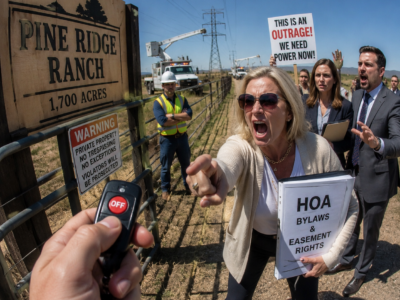
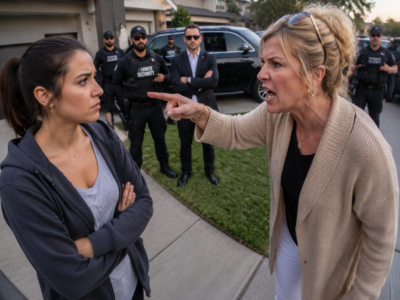
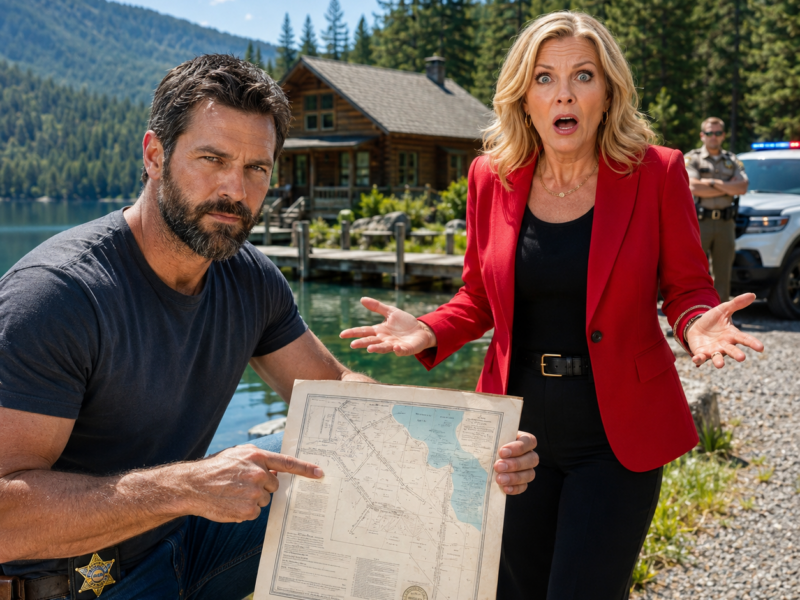
She stood on the gravel near the dock in a red blazer, one hand lifted like she was stopping traffic, her face pale with fury as two deputies stepped out of their cruiser behind her. The lake was bright behind us, so calm it looked unreal. Pine trees stood high on the mountain slope. My grandfather’s cabin sat twenty yards from the water, weathered and dark and stubborn, exactly the way he had left it.
Marjorie pointed at me.
“That man has no right to be here,” she told the deputies. “This is HOA-controlled lake property. He is trespassing, and I want him removed.”
My cousin Mateo froze with a cardboard box in his arms. The movers stopped halfway down the porch steps. My old dog, Rusty, barked once from inside the cabin and then went quiet, like even he understood the air had changed.
I looked at the deputies.
Then I looked at Marjorie.
Then I reached into the folder sitting on my grandfather’s dock and pulled out the yellowed deed, the probate order, the old survey map, and the recorded covenant exemption my grandfather had paid a lawyer to file back in 1987.
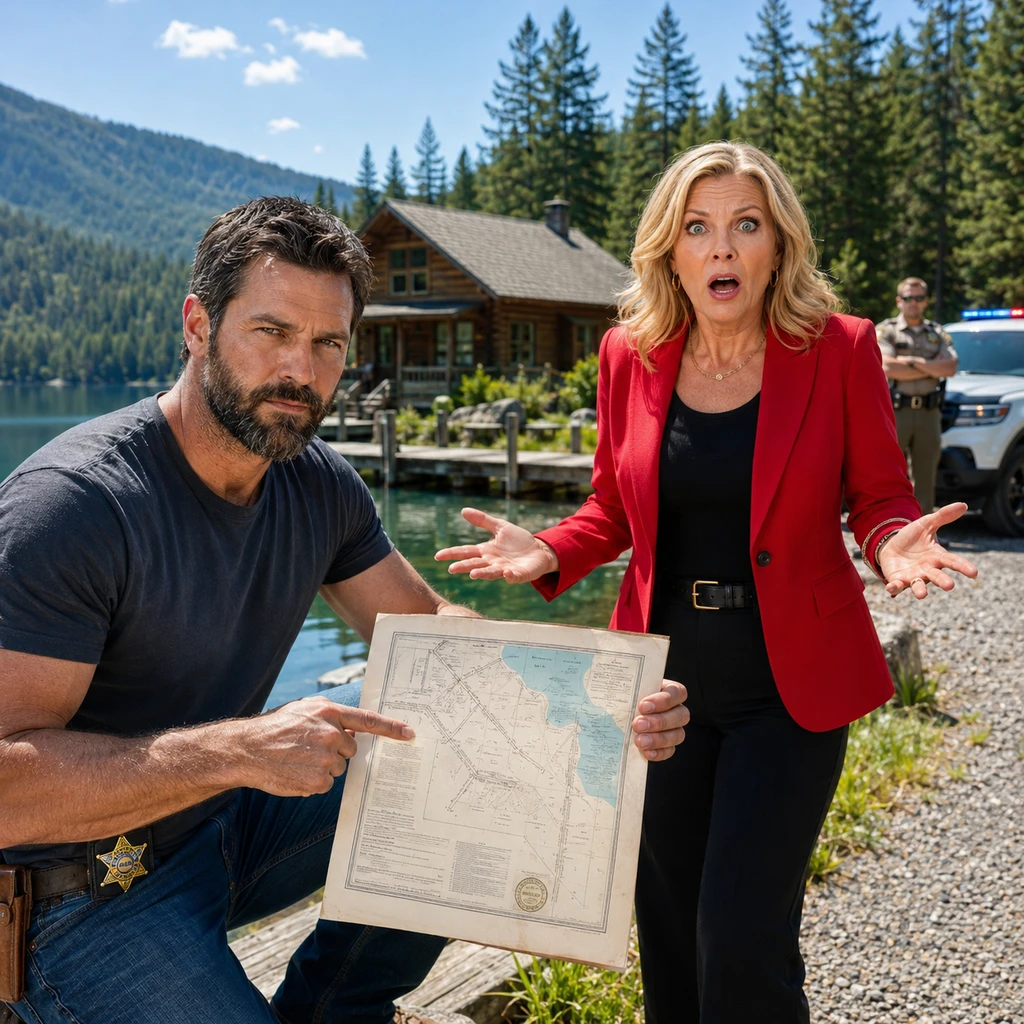
I held them up.
“Done,” I said. “Legally.”
Marjorie blinked.
She had expected shouting. She had expected panic. She had expected me to plead, explain, maybe step back and let her control the scene. People like her are good at creating chaos because chaos makes reasonable people look guilty.
But I did not move.
That cabin had been built by my grandfather before the HOA existed. Before the luxury lake houses. Before the gatehouse. Before people started saying “community standards” when what they really meant was “we want your land.”
One deputy took the papers from me. His name was Deputy Cole. I knew him from town, though not well. He looked through the documents, then looked at the cabin, then looked at Marjorie.
“Mrs. Bellamy,” he said slowly, “this appears to be private property.”
Her mouth opened.
“No. No, absolutely not. That cabin is inside Pine Harbor Shores.”
“The subdivision may surround it,” he said. “That doesn’t mean it owns it.”
She laughed once, sharp and nervous.
“You don’t understand. The HOA has authority over all lakefront structures.”
I said, “Not mine.”
She spun toward me, eyes bright with hatred.
“You are making a terrible mistake.”
I looked past her at the lake, at the dock where my grandfather taught me how to tie a fishing knot, at the porch where my grandmother used to shell peas in a white rocking chair, at the cabin window where my mother cried the day we scattered Grandpa’s ashes.
“No,” I said quietly. “I made the mistake of thinking you’d respect a deed.”
That was the first time Marjorie Bellamy realized she had called the law to witness her own lie.
My name is Wyatt Mercer. At the time, I was forty-one years old, divorced, tired, and living out of boxes in a rented duplex in Spokane. I had spent most of my adult life as a general contractor, which means I know two things better than most people: how buildings stand, and how people cut corners when they think nobody is checking.
My grandfather, Silas Mercer, had owned the lake cabin on Clearwater Ridge since 1969. Back then, Clearwater Lake was not a luxury destination. It was cold water, muddy roads, mosquitoes, and cabins built by people who understood that vacation meant fixing your own roof.
Grandpa bought three acres of shoreline from a retired logger for $7,800 and a used fishing boat. That number sounds ridiculous now, but in 1969 it was a serious amount of money for a man who repaired farm equipment and saved cash in coffee cans.
He built the cabin himself with help from friends, cousins, and one local preacher who apparently was better with a hammer than with sermons. The walls were hand-hewn pine. The fireplace was river stone. The dock leaned slightly to the left because Grandpa refused to admit his measurements were off. He called it “character.”
When I was a kid, Clearwater Ridge felt like another country.
No traffic. No school bells. No neighbors staring over fences. Just water, trees, and Grandpa whistling old country songs while frying trout in a cast-iron pan.
My parents brought me there every summer. I slept in the loft under a quilt that smelled like cedar and sun. I learned to swim off that dock, though “learned” is generous. Grandpa tossed me in wearing an orange life jacket and said, “Kick or complain, but choose fast.”
That was his way.
Rough at the edges. Kind underneath.
After Grandma died, the cabin became even more important to him. He stayed there longer each summer. He planted tomatoes in buckets beside the porch. He repaired the same dock every spring even when everybody told him to rebuild it. He kept a coffee pot on the stove and a radio by the window. Sometimes, when I visited as an adult, we would sit on the porch and say almost nothing for an hour.
That was our language.
Men in my family were never great at speeches. We fixed things. We brought firewood. We stood nearby when words were too much.
Then Pine Harbor Shores happened.
A developer bought the forested land around Grandpa’s parcel and carved it into lake lots for people who wanted mountain views without mountain inconvenience. They built paved roads, a clubhouse, tennis courts, a gate, and a small marina on the north end. They created the Pine Harbor Shores Homeowners Association and began selling “exclusive lake living” to people from Seattle, Portland, and California.
Grandpa hated the whole thing.
Not because he hated newcomers. He did not. He believed everyone deserved a place to rest. What he hated was the attitude that came with it: the idea that money arriving later could outrank memory that had been there first.
The developer tried to buy him out three times.
The first offer was polite.
The second offer was aggressive.
The third offer came with a hint that his road access might become “complicated” if he refused.
That was when Grandpa hired an attorney named Martin Pike, who looked like a funeral director and wrote letters like a man sharpening knives.
Martin reviewed every deed, road easement, shoreline right, and county map. Then he helped Grandpa record a covenant exemption so clear a child could understand it:
The Mercer parcel was not part of Pine Harbor Shores. It was not subject to HOA covenants. It did not grant community lake access. It did not share dock rights. It could not be added later without written consent from the Mercer owner.
Grandpa kept a copy in a coffee tin above the refrigerator.
“Paper beats noise,” he used to say.
I did not understand how important that sentence was until Marjorie Bellamy showed up on moving day with a sheriff’s cruiser behind her.
Grandpa died in February.
He was ninety-one, stubborn to the end, and still mad that the hospital coffee was weak. His last clear conversation with me happened two days before he passed. I was sitting beside his bed, holding one of those plastic cups with a straw, trying not to look scared.
He said, “Wyatt, don’t sell the cabin fast.”
“I won’t.”
“I mean it.”
“I said I won’t.”
He opened one eye.
“You say plenty of things when you want an old man to rest.”
That made me smile, though I hated how thin his voice had become.
Then he said something I will never forget.
“They’ll come for it when I’m gone.”
I thought he meant real estate agents.
He meant the HOA.
His will left the cabin and the three acres to me. My mother had passed years earlier. My uncle wanted nothing to do with the place because he lived in Arizona and believed any temperature under seventy degrees was an insult. My cousins loved visiting but did not want the responsibility. So it came to me.
At first, I did consider selling.
I will be honest about that.
My marriage had ended the year before. I was behind on work. I had debt. The cabin was worth more money than Grandpa could ever have imagined. A realtor told me lakefront parcels like his were “rare legacy opportunities,” which is a fancy way of saying rich people will pay stupid money for old grief.
But every time I imagined signing it away, I saw Grandpa’s hands on the porch railing.
I saw Grandma at the stove.
I saw my mother laughing in the canoe.
And I heard Grandpa: Don’t sell fast.
So I decided to move there for a year. Fix it. Breathe. Figure out what kind of life I wanted next.
That is when Marjorie Bellamy entered the story.
She sent the first letter before probate was even finished.
It came in a cream envelope with the Pine Harbor Shores logo embossed at the top, as if a threatening letter became classier with expensive paper.
Dear Mr. Mercer,
On behalf of the Pine Harbor Shores Homeowners Association, please accept our condolences regarding the passing of Mr. Silas Mercer. As the apparent successor occupant of the lake cabin commonly known as Mercer Cabin, you are required to contact the board within ten days to complete ownership transition, covenant acknowledgment, community access agreement, and assessment enrollment.
I read that sentence twice.
Apparent successor occupant.
Not owner.
Occupant.
That was not an accident.
People who use language that carefully are usually trying to move the ground beneath your feet.
I called the number at the bottom of the letter. Marjorie answered herself.
“This is Marjorie Bellamy, president of Pine Harbor Shores.”
No hello. No warmth. Just title first, person second.
“This is Wyatt Mercer. I received your letter.”
“Oh yes, Mr. Mercer. I’m glad you called. We need to get ahead of this before there’s confusion.”
“There’s no confusion. I inherited my grandfather’s cabin.”
A tiny pause.
“Yes, well, the cabin sits within the Pine Harbor lake environment.”
“The lake environment?”
“That is the phrase used in our planning documents.”
“It’s not in my deed.”
Her voice cooled immediately.
“Mr. Mercer, your grandfather was permitted certain historical uses, but succession creates a new compliance event.”
I nearly laughed.
A new compliance event.
I have worked construction contracts for twenty years. I know nonsense when it arrives wearing boots.
“Mrs. Bellamy,” I said, “my grandfather’s property is exempt from your HOA.”
“That is your interpretation.”
“No. That is the recorded covenant exemption.”
Another pause. Longer this time.
“I would advise you not to rely on outdated paperwork.”
That sentence told me almost everything I needed to know.
Outdated paperwork.
She did not deny the paperwork existed. She just wanted me to believe time had weakened it.
I asked her to send any claim in writing.
She said, “We prefer cooperative resolution.”
I said, “I prefer accurate records.”
That ended the call.
The next two months were full of letters.
The HOA claimed the dock required inspection.
The HOA claimed the gravel road needed community maintenance assessment.
The HOA claimed the cabin’s exterior color had to be reviewed.
The HOA claimed any moving activity needed board notice.
The HOA claimed the shoreline was part of a “community visual corridor.”
That phrase made my cousin Mateo laugh so hard he nearly spilled beer on my kitchen counter.
“Community visual corridor?” he said. “That means they can look at it?”
“Apparently, looking creates ownership now.”
Mateo had agreed to help me move. He was thirty-five, loud, loyal, and built like a refrigerator with tattoos. He had grown up coming to the cabin too, and he loved Grandpa fiercely.
“You want me to talk to this lady?” he asked.
“No.”
“I can be polite.”
“That’s what worries me.”
The truth was, I did not want a fight. I wanted to move into the cabin, repair the roof, clean the chimney, replace the old water heater, and sit on the dock without hearing anyone say covenant acknowledgment.
But I knew enough to prepare.
I went to the county recorder’s office and pulled fresh copies of every document. Deed. Survey. Probate order. Covenant exemption. Road easement. Shoreline permit. Tax map. I put them in a folder and made three digital backups.
I also called Grandpa’s old attorney, Martin Pike.
He was retired by then, eighty-three years old, and still sounded like he had been born annoyed.
“Silas told me you might call,” he said.
“He talked to you recently?”
“Last year. Said the HOA woman was sniffing around again.”
“Again?”
Martin made a dry sound that might have been a laugh.
“Son, that association has wanted your grandfather’s dock for thirty years.”
“My dock?”
“Your dock. Your road. Your shoreline. Your cabin. In that order.”
He explained what Grandpa had never fully told me. Pine Harbor Shores had been marketed with beautiful lake access, but the actual common marina was small, crowded, and expensive to maintain. The best protected cove on the south end of the lake was Grandpa’s shoreline. His dock sat in calm water, perfect for kayaks and small boats. The HOA had tried for years to label it “historic community access,” even though Grandpa had chased trespassers off with a boat horn and language Grandma did not approve of.
“Can they win?” I asked.
“Not if the judge can read.”
That sounded comforting and terrifying at the same time.
Martin told me to document everything and not argue alone.
“People like this don’t need to be right,” he said. “They need to make you tired.”
That was the most accurate thing anyone said to me all year.
Moving day came in late May.
The sky was blue, the lake was glassy, and the air smelled like pine pitch and dust from the moving truck. Mateo drove the rental van. I followed in my pickup with Rusty riding shotgun, his gray muzzle pressed to the window.
For the first mile inside Pine Harbor Shores, everything looked painfully perfect. Fresh mulch. Stone mailboxes. Neatly trimmed hedges. American flags hanging from big porches. Houses with names like Eagle View Lodge and Serenity Point, which always makes me suspicious. If you have to name your house Serenity, chances are someone inside is yelling.
The road narrowed as it curved down toward Grandpa’s cabin. The pavement ended where the HOA boundary became legally meaningless, though Marjorie would have argued otherwise. Gravel crunched under my tires. Trees closed in. Then the cabin appeared through the pines.
I had not seen it since the funeral.
For a moment, I could not move.
The cabin looked smaller than I remembered and more powerful. The porch sagged slightly on the left. The chimney needed pointing. The dock boards were silver with age. But the place stood there like an old man with his boots planted, refusing to be impressed by time.
Mateo parked the moving truck and climbed out.
“You okay?”
“Yeah,” I said.
I was not.
But sometimes “yeah” is the only word that keeps you standing.
We had unloaded maybe half the truck when Marjorie arrived.
She came in a white SUV, fast enough to throw gravel, then stopped near the dock as if she owned the lake itself. She stepped out wearing black slacks, a red blazer, and the kind of expression people get when they have rehearsed a speech in the mirror.
Behind her was a thinner man with a tablet, and behind him were two HOA security volunteers in polo shirts.
That almost made me laugh.
HOA security volunteers.
Nothing says authority like a retired dentist in a polo shirt holding a radio.
Marjorie walked straight toward me.
“Mr. Mercer, stop unloading immediately.”
I was carrying a box labeled KITCHEN.
“No.”
Her eyes widened.
“This move has not been approved.”
“It doesn’t need approval.”
“This structure is under review.”
“This structure is my house.”
“It is not your house until the board recognizes the transition.”
That line hit me harder than I expected.
Not because it was legally serious. It was not.
It hit me because she said it in front of my grandfather’s porch, on land he had spent half his life protecting, while my grandmother’s curtains still hung in the window.
I set the box down.
“Marjorie, listen carefully. I own this cabin. I own this land. I own this dock. I have the recorded documents proving it. Your board has no authority here.”
Her face tightened.
“You are escalating.”
“No. I am unloading dishes.”
Mateo coughed to hide a laugh.
Marjorie turned sharply.
“And who is this?”
“My cousin.”
“Is he staying here?”
“He is helping me move.”
“Overnight occupancy by non-registered persons is not permitted.”
Mateo looked at me.
“Wyatt, am I a non-registered person?”
“Apparently.”
He nodded solemnly.
“I’ll try to register my person later.”
That was when Marjorie called the sheriff.
She did it with theater. Phone high. Voice trembling. Eyes locked on mine.
“Yes, I need deputies at the Mercer cabin near Clearwater Ridge. An unauthorized man is occupying HOA lake property and refusing to leave. There are multiple unknown males and a moving truck. I’m concerned for community safety.”
Unknown males.
Community safety.
There it was.
The magic language people use when they want the law to arrive already suspicious.
I stepped back from her, kept my hands visible, and told Mateo to keep unloading paused.
He frowned.
“She’s lying.”
“I know.”
“Then why are we standing here like we did something wrong?”
“Because I want the deputies to see who is calm.”
That is a lesson I learned the hard way in life. Being right does not always protect you if you look easier to blame. When someone tries to create a scene, sometimes the strongest thing you can do is refuse the role they wrote for you.
The deputies arrived eighteen minutes later.
Marjorie rushed toward them before their boots fully hit the gravel.
“He’s trespassing,” she said. “He has no approval, no community authorization, and he’s attempting to take possession of a controlled structure.”
Deputy Cole listened, face neutral. His partner, Deputy Harlan, stood back and scanned the area. Neither looked eager to become part of an HOA drama, which made me like them immediately.
Cole came to me.
“Sir, can you identify yourself?”
“Wyatt Mercer.”
“Do you have any paperwork showing ownership?”
“Yes.”
I handed him the folder.
Marjorie made a scoffing sound.
“He printed whatever he wanted. This needs board verification.”
Cole looked at the probate order.
Then the deed.
Then the exemption.
Then the survey.
He walked toward his cruiser and radioed dispatch to check the parcel records. We waited in a silence so tense even the lake seemed to stop moving.
Marjorie crossed her arms.
“This is unnecessary,” she said. “The HOA can clarify this internally.”
I said, “You called the sheriff.”
She looked away.
After several minutes, Cole returned.
“The county record shows the parcel owner as Wyatt Mercer following probate transfer. The parcel is separate from Pine Harbor Shores common property.”
Marjorie’s expression went blank.
“That cannot be current.”
“It is current.”
“The HOA map shows—”
“The county map controls.”
That sentence should have ended it.
It did not.
People like Marjorie do not stop when facts appear. They look for a higher volume.
She turned to Deputy Harlan.
“Are you really going to allow him to occupy disputed property?”
Harlan said, “Ma’am, we don’t remove lawful owners from their own property because an HOA map says something different.”
Her face went red.
“This is a civil matter.”
Cole nodded.
“It became a law enforcement matter when you called us alleging trespass.”
That landed.
I saw it in her eyes.
For the first time that day, she understood there would be a record.
An official one.
A 911 call. Body cameras. Deputies verifying my deed. Her claiming property that was not hers.
Cole then looked at me.
“Mr. Mercer, do you want her removed from your property?”
I looked at Marjorie.
Part of me wanted to say yes. Immediately. Loudly. I wanted to watch the red blazer retreat back up the gravel road. I wanted the movers, the volunteers, the whole perfect gated community to see her lose.
But I heard Grandpa again.
Paper beats noise.
“I want her informed she has no permission to interfere with my move or enter my property,” I said. “If she stays after that, then yes, I want her removed.”
Cole turned to Marjorie.
“Mrs. Bellamy, you need to leave Mr. Mercer’s property.”
She stared at him like he had slapped her.
“You’ll regret mishandling this.”
Harlan’s eyebrow lifted.
“Ma’am.”
She said nothing else. She turned, marched back to her SUV, and drove away hard enough to spit gravel.
Mateo watched her go.
“Well,” he said, “welcome home.”
I laughed, but my hands were shaking.
That is the part people do not see in stories like this. The satisfying moment is real, but so is the aftermath. Your body still carries the stress. Your chest still feels tight. You still wonder what comes next, because people who threaten you in public rarely go home and discover humility overnight.
We finished unloading by sunset.
When the movers left, Mateo stayed to help set up the bed and connect the old fridge. Rusty explored every corner like a detective. I found Grandpa’s coffee tin above the refrigerator, exactly where Martin said it would be.
Inside were old fishing licenses, a folded photo of Grandma, a spare cabin key, and another copy of the covenant exemption.
On top, written in Grandpa’s shaky handwriting, was a note.
For Wyatt. When they come, show them this. Then call Martin.
I sat at the kitchen table with that note in my hand for a long time.
Mateo found me there.
“You good?”
“No.”
He pulled out the chair across from me.
“You want me to stay tonight?”
I almost said no. Pride is stupid that way. It tells a man to be alone right when he should let someone sit nearby.
“Yeah,” I said. “I’d appreciate that.”
That night, after Mateo fell asleep on the couch, I walked outside and stood on the dock. The moon was high over the lake. The cabin windows glowed behind me. Somewhere across the water, music played faintly from a big house with too many lights.
I should have felt victorious.
Instead, I felt invaded.
Not physically. Marjorie had left. The deputies had confirmed the truth. My boxes were inside.
But she had taken something from the day. Moving into Grandpa’s cabin should have been sad, hopeful, maybe even beautiful. Instead, it became a police call.
That made me angry in a way I did not fully understand yet.
I do not hate HOAs as a concept. I know some neighborhoods need shared rules. Roads need maintenance. Pools need cleaning. Nobody wants a junkyard next door. Reasonable rules can keep peace.
But rules without humility become weapons.
And Marjorie Bellamy had built herself a weapon.
The first fine arrived three days later.
Unauthorized Occupancy of Historical Lake Structure: $500.
The second came the next day.
Unapproved Moving Activity: $750.
The third came by email.
Failure to Submit Transition Documentation: $1,000.
Then a notice of daily penalties.
I forwarded everything to Martin Pike. He replied with two words:
Expected. Good.
Good?
I called him.
“How is this good?”
“Because now they’re creating evidence.”
“That’s one way to look at harassment.”
“It’s the legal way.”
Martin referred me to a younger attorney named Rebecca Shaw, who had taken over some of his old property cases. Rebecca’s office was above a bakery in town and smelled like cinnamon rolls and paper dust. She was in her mid-forties, calm, sharp, and wore glasses she took off only when she was about to say something expensive.
She reviewed my documents, the moving day bodycam summary, and the HOA fines.
Then she smiled.
Not a happy smile.
A lawyer smile.
“They stepped in it.”
“That sounds good.”
“It is. But don’t relax.”
“I wasn’t planning to.”
She explained that we could file for declaratory judgment and quiet title, asking the court to confirm that my parcel was not subject to the HOA. We could also seek an injunction barring the HOA from enforcement actions, trespass, interference with access, and false claims over the cabin, dock, and road.
“In plain English,” I said, “can we legally ban them from my property?”
“Yes,” she said. “If the facts are as strong as they look.”
“They are.”
“Then we make them stronger.”
That became my life for the next six weeks.
I worked on the cabin during the day and built evidence at night. I photographed every sign. Every letter. Every email. Every unknown car that slowed by the driveway. I saved voicemails. I requested county records. I talked to old neighbors outside the gate.
That is how I met Earl Whitaker.
Earl lived in a small blue cabin half a mile down the old county road, outside Pine Harbor entirely. He was seventy-eight, wore suspenders, and had the suspicious eyes of a man who had seen too much development and not enough apologies.
When I introduced myself as Silas Mercer’s grandson, his face softened.
“Silas was a good man,” he said. “Stubborn as a stump, but good.”
I asked him about the HOA.
He spat into the grass.
“They’ve wanted that cove since before that red-blazer woman knew the lake existed.”
He invited me onto his porch and brought out a folder. Apparently, older men in lake communities keep folders the way dragons keep gold.
Inside were copies of old letters from Pine Harbor developers to my grandfather, photos of survey stakes that had been moved, and a newspaper clipping from 1992 about a dispute over lake access.
Then Earl showed me something I did not expect.
A glossy Pine Harbor Shores brochure from the late 1990s.
On the map, Grandpa’s dock was marked with a tiny icon.
South Cove Access Point.
My stomach dropped.
“They advertised my grandfather’s dock?”
“Sure did,” Earl said. “Silas raised hell. They claimed it was a printing error.”
“Did they correct it?”
He snorted.
“On paper maybe.”
Earl let me scan everything.
That brochure became the first clue that Marjorie’s claim was not just a misunderstanding. It was inherited ambition. The HOA had been telling versions of the same lie for decades, hoping one day a Mercer owner would be weak enough, broke enough, or tired enough to accept it.
Then I found the second clue at the county planning office.
Pine Harbor Shores had submitted updated community maps three years earlier during a road improvement application. One map showed my parcel shaded lightly, not as common property exactly, but as part of the “lakefront management zone.” The original survey did not show that. Someone had added it.
Rebecca noticed immediately.
“This is not the recorded plat,” she said.
“Can they just change it?”
“No. But they can confuse people with it.”
That was the key.
Confusion.
Marjorie’s power came from confusion. Make the map confusing. Make the language official. Make the homeowner feel isolated. Make deputies unsure. Make buyers believe they have rights. Make the truth expensive to prove.
I began to understand why Grandpa had been so careful.
One evening, while cleaning out the bedroom closet, I found his journals. Not private emotional diaries. Grandpa was not that kind of man. These were practical notebooks: weather, repairs, fish caught, visitors, expenses, complaints.
In one notebook from 2004, I found this entry:
HOA woman came again. Said future owners may have to comply. Told her future owners will have the same deed. She said times change. I said not on my land.
I laughed when I read it.
Then I cried.
Grief comes strangely. Not always at funerals. Sometimes it comes from six words written in pencil by someone who knew a fight was coming long after he would be gone.
I said not on my land.
That became the sentence I carried into court.
Before the hearing, Marjorie tried one more stunt.
She had Pine Harbor maintenance workers place a wooden sign near the entrance to my gravel road.
SOUTH COVE COMMUNITY ACCESS — RESIDENTS ONLY
I found it at 6:30 on a Tuesday morning.
For a full minute, I just stared.
Then I took pictures.
Then I called Rebecca.
Then I called the sheriff’s office, because this time I wanted a trespass report before touching anything.
Deputy Cole came out again. He looked at the sign, then at me.
“She doesn’t quit, does she?”
“No.”
“Do you want it removed?”
“Yes. But documented first.”
He photographed it, confirmed the location sat inside my parcel line, and helped me pull it from the ground. The post holes were fresh. Whoever installed it had walked right past my private property sign.
That incident gave Rebecca what she wanted for an emergency motion.
“The court likes paperwork,” she said. “But the court really likes fresh stupidity.”
At the temporary injunction hearing, Marjorie arrived in a red blazer again. I wondered if she owned twenty of them or if the same jacket simply fed on conflict and regenerated overnight.
The courthouse was old brick, with squeaky benches and bad coffee in the hallway. I wore a clean shirt, boots without mud, and Grandpa’s watch. Mateo sat behind me. Earl came too, holding his folder like a weapon. Deputy Cole was subpoenaed for testimony. Martin Pike attended even though he said he was retired and “too old to watch fools lie under oath.” Apparently not.
Judge Harriet Monroe presided. She was small, silver-haired, and had the kind of courtroom presence that made everyone sit straighter without knowing why.
Rebecca presented our case calmly.
The deed.
The covenant exemption.
The probate transfer.
The county map.
The sheriff’s response on moving day.
The unauthorized fines.
The South Cove Access sign.
The old brochure.
Grandpa’s attorney records.
Marjorie’s lawyer tried to make the HOA sound reasonable. He argued the association had long maintained roads near the parcel, that community residents had historically believed the cove was part of the Pine Harbor lake system, that the HOA had safety concerns, that shared shoreline expectations created practical authority.
Judge Monroe interrupted.
“Counsel, practical authority is not a property interest.”
That sentence made Martin Pike smile for the first time all morning.
Marjorie testified after lunch.
She spoke smoothly at first. She said she was trying to preserve community order. She said the HOA had no intention of stealing anything. She said I had been uncooperative from the start. She said the moving day call was made in good faith because she believed unknown individuals were occupying a structure under association review.
Rebecca stood for cross-examination.
“Mrs. Bellamy, did you have the county deed when you called law enforcement?”
“I had HOA documents.”
“That is not what I asked.”
Marjorie shifted.
“No.”
“Did you have a court order giving the HOA possession of Mr. Mercer’s cabin?”
“No.”
“Did you have a recorded easement over his dock?”
“No.”
“Did you have written consent from Mr. Mercer to enter the parcel or place signage?”
“No, but—”
“Did Deputy Cole inform you on moving day that the county records showed Mr. Mercer as the owner?”
“Yes.”
“After that date, did the HOA continue issuing fines?”
Marjorie hesitated.
“Yes.”
“After that date, did HOA workers place a sign calling his private road community access?”
Her lawyer objected. Overruled.
Marjorie’s mouth tightened.
“Yes, under board instruction.”
Rebecca picked up the old Pine Harbor brochure.
“Are you familiar with this document?”
“I have seen many historical materials.”
“That wasn’t my question.”
Marjorie looked at the brochure.
“Yes.”
“This brochure labels the Mercer dock as South Cove Access Point, correct?”
“That appears to be a historic marketing error.”
“Yet last month, your HOA placed a new sign using the same phrase: South Cove Community Access.”
Silence.
Rebecca let it sit.
That is something good lawyers understand. Silence can be sharper than shouting.
Marjorie finally said, “The association’s position evolved based on community need.”
Judge Monroe leaned forward.
“Community need does not rewrite a deed, Mrs. Bellamy.”
For me, that was the moment the room changed.
Until then, the fight had felt personal. My cabin. My grandfather. My moving day. My anger. But when the judge said that sentence, the truth became bigger. This was about every person who has ever been told by someone with a clipboard that their rights are inconvenient.
The temporary injunction was granted.
The HOA, its board members, agents, contractors, volunteers, and representatives were barred from entering my parcel, contacting me except through counsel, placing signs, issuing fines, blocking access, advertising lake access through my property, or representing the Mercer cabin, dock, road, or shoreline as part of Pine Harbor Shores.
In plain English, the HOA was legally banned from my land.
For now.
Marjorie’s face when the judge read the order looked almost exactly like the image burned into my memory: eyes wide, hands slightly lifted, mouth open like the world had suddenly broken a promise to her.
I did not celebrate in the courthouse.
Not outwardly.
But when we stepped outside, Mateo hugged me so hard my ribs hurt.
“Grandpa would’ve loved that,” he said.
“Grandpa would’ve complained it took too long.”
“Also true.”
The temporary order should have scared the HOA into settling.
Instead, it split them open.
Some board members panicked. Others doubled down. Marjorie sent a community email calling the injunction “a temporary procedural setback.” She claimed the HOA remained committed to “protecting resident expectations.”
Resident expectations.
That phrase made my blood pressure rise.
Expectations are not ownership. Wanting something badly does not make it yours. Believing a lie for a long time does not turn it into a deed.
But many residents had been sold that lie.
That became clear when I started receiving letters from Pine Harbor homeowners. Some were nasty. Some were confused. A few were heartbreaking.
One man wrote that he bought his house specifically because the realtor told him South Cove was a quiet access point for kayaks. A retired couple said they had paid extra for a “lake access assessment” for years and wanted to know where the money went. A woman named Danielle said she had always wondered why she felt uncomfortable walking through the Mercer property, because “it never felt like ours.”
I did not blame every homeowner.
That is important.
People can benefit from a lie without creating it. Some of them were misled too. But once the truth is shown, you have a choice. You can admit you were misled, or you can demand the lie continue because it benefits you.
Marjorie chose the second.
The permanent hearing took place four months later.
By then, Rebecca had uncovered enough evidence to make Pine Harbor’s insurance company nervous and its attorney exhausted. Emails showed Marjorie had known about the covenant exemption before moving day. Board minutes showed the HOA had discussed “leveraging transition uncertainty” after Grandpa’s death. One email from Marjorie to another board member said:
If Mercer occupies before we establish authority, it becomes much harder to bring him into compliance. Moving day is our best opportunity.
I read that sentence ten times.
Moving day is our best opportunity.
My grandfather had been dead three months. I was grieving, packing, carrying boxes, trying to step into a house full of ghosts. And Marjorie saw opportunity.
That is what still makes me angriest.
Not that she wanted access. Not that she misunderstood something. People misunderstand property lines all the time.
She saw a vulnerable moment and tried to use it.
That is a kind of cruelty people often hide behind procedure.
At the permanent hearing, the courtroom was fuller. Pine Harbor residents came. Reporters came. I hated that part. I am not a public person. I build decks, repair kitchens, and prefer conversations where nobody is recording. But by then, the story had grown beyond me.
The local headline had been blunt:
HOA Tried To Claim Inherited Lake Cabin, Judge Asked To Ban Enforcement
Marjorie hated the attention. Or rather, she hated not controlling it.
Judge Monroe heard testimony for two days.
Earl testified about the old brochure and Grandpa’s fights with the developer.
Martin Pike testified about the covenant exemption.
Deputy Cole testified about moving day and confirmed Marjorie had claimed I was trespassing despite lacking county verification.
A surveyor named Tessa Flynn explained the parcel boundaries in a tone so dry it could have turned soup into dust. She showed the judge that my road, dock, and shoreline were entirely within the Mercer parcel, and that the HOA’s “lakefront management zone” map had no legal force.
Then I testified.
I had dreaded it for weeks.
Not because I was afraid of the truth. Because saying personal things in public feels like pulling your ribs open.
Rebecca asked me what the cabin meant to my family.
I looked down at my hands.
They looked like Grandpa’s hands now. Bigger than I remembered. Scarred. Dry. Knuckles rough from years of work.
“My grandfather built it,” I said. “My grandmother lived half her summers there. My mother brought me there every year until she got sick. It’s not a clubhouse. It’s not an access point. It’s where my family learned how to be together.”
The courtroom was quiet.
I continued.
“When I moved in, I wasn’t trying to start a fight. I was trying to keep a promise to a dying man. Mrs. Bellamy called the sheriff on me while I was carrying boxes into my own house. She told deputies I had no right to be there. And after they confirmed I owned it, the HOA kept sending fines, placing signs, and telling people my dock was community access.”
My voice tightened.
I took a breath.
“I don’t want their clubhouse. I don’t want their pool. I don’t want to tell them how to live. I just want them to stop trying to take what my grandfather protected.”
That was all.
Simple.
True.
Marjorie did not look at me.
Her lawyer tried to argue hardship. He said a permanent injunction would confuse residents. He said the HOA would need time to correct materials. He said banning contact might make maintenance coordination difficult.
Judge Monroe asked, “What maintenance is the HOA required to perform on Mr. Mercer’s property?”
The lawyer paused.
“None, Your Honor.”
“Then coordination should be simple.”
By late afternoon, the judge ruled.
The Mercer parcel was legally separate from Pine Harbor Shores. The HOA had no covenant authority, no assessment authority, no enforcement authority, no access rights, no dock rights, and no right to represent my property as a community amenity. The court issued a permanent injunction barring the HOA and anyone acting on its behalf from entering, interfering with, advertising, assessing, fining, or claiming control over my property.
The HOA also had to correct its maps, notify all residents in writing, remove all references to South Cove access, refund improper lake access assessments tied to my parcel, and pay my attorney’s fees related to the injunction.
Then Judge Monroe looked directly at Marjorie.
“Mrs. Bellamy, governance is not ownership. The authority of a homeowners association begins and ends where the law says it does. It does not expand because a board finds private property useful.”
I will remember that sentence forever.
Governance is not ownership.
Outside the courthouse, a reporter asked me how I felt.
I could have given a big speech. I could have attacked Marjorie. I could have played the dramatic hero.
But I was too tired for performance.
I said, “My grandfather was right to keep paperwork.”
That made the evening news.
Mateo said I sounded boring.
I said boring won.
The aftermath was messier than people expected.
Stories like this usually make it seem like once the judge rules, everyone claps and the villain disappears. Real life does not clean itself that quickly.
Pine Harbor residents were furious when they learned they had paid assessments for access they never legally had. Some blamed Marjorie. Some blamed the developer. A few blamed me, which was impressive in its stupidity. One man sent me an email saying, “You destroyed a community tradition.”
I replied with one sentence:
“Tradition is not a deed.”
Rebecca told me to stop replying to angry emails.
She was right.
The HOA board held an emergency meeting. It lasted four hours. According to Danielle, who later became a friend, Marjorie tried to frame the court order as judicial overreach. Then someone read her “moving day is our best opportunity” email aloud.
That was the end of her presidency.
She resigned before the vote to remove her could pass, which is a common trick among people who want to call falling “stepping down.” Her husband sold their house the following spring. The listing described it as “an elegant lake community home with access to shared amenities.”
Danielle sent me the link with a note:
At least they didn’t mention your dock. Progress.
The HOA corrected the map. The South Cove name disappeared from the website. The refund process took months and made everybody angry, which may be the closest thing to equality an HOA can achieve.
I repaired the cabin through that fall.
Work saved me.
That is something I believe strongly. When your life has been shaken, find something real to put your hands on. Sand a board. Paint a wall. Fix a hinge. Plant something. Cook something. Clean a room. The world may still be unfair, but your hands need proof that effort can change what is in front of you.
I replaced the porch posts first. Grandpa had sistered two of them with scrap lumber and optimism. I rebuilt them properly, though I apologized out loud while doing it.
I repaired the dock next. Not perfect. I kept the slight lean. Character, after all.
Mateo helped me haul old furniture from the loft. We found fishing lures, moldy magazines, a box of Grandma’s recipes, and a stack of Polaroids that made me sit down on the floor.
One photo showed Grandpa younger than I ever knew him, standing shirtless by the lake with a hammer in one hand and a cigarette in his mouth. On the back, Grandma had written:
Silas says this cabin will outlast us all. I think he may be right.
She was.
Near Thanksgiving, I invited a few people over.
Not the whole community. I was not ready for that. Just Mateo, Earl, Danielle, Deputy Cole and his wife, Rebecca, and old Martin Pike, who arrived with a bottle of whiskey and announced he was too old for gratitude speeches.
We ate chili on the porch while cold wind moved across the lake. Rusty slept under the table. Earl told stories about Grandpa that were only half appropriate. Martin admitted that Silas once threatened to park a bulldozer across the developer’s sales office driveway. Rebecca said she wished he had.
At one point, Danielle looked toward the dock.
“I’m sorry,” she said.
“For what?”
“For believing the HOA map. We used to walk down there sometimes. Years ago. I honestly thought it was allowed.”
I appreciated that she said it plainly. No excuses. No “but we were told.” Just sorry.
I nodded.
“Thank you.”
She looked embarrassed.
“I should have asked.”
That sentence mattered more than she knew.
Because that is the heart of community. Not assuming. Asking.
Boundaries do not destroy neighborliness. They make honest neighborliness possible.
The next summer, I hosted a lake day.
This surprises people when I tell the story. They expect me to put up fences, cameras, angry signs, maybe a gate with spikes. And I did put up a private property sign, because I am not an idiot. But I also invited neighbors I trusted. Pine Harbor people too, including some who had apologized and meant it.
Kids swam off the dock. Mateo grilled burgers. Earl sat in a chair and criticized everyone’s casting technique. Danielle brought watermelon. Deputy Cole came off duty and admitted his kids had begged to see “the famous forbidden dock.”
I laughed at that.
The dock was not forbidden.
It was private.
There is a difference.
Private does not mean hostile. It means permission matters.
Marjorie never came, of course. By then she had moved to another gated community two counties away. I heard she joined a landscaping committee there. I prayed for their shrubs.
In August, I received a letter forwarded through Rebecca.
It was from Marjorie.
I almost threw it away. Then curiosity won.
The letter was short.
She did not apologize. Not really. People like Marjorie treat apologies like taxes: something to minimize, delay, or avoid through loopholes.
She wrote that she had “acted in the interest of community stability,” but acknowledged that “certain assumptions were legally incorrect.” She said she hoped I understood the pressure of leadership.
I laughed out loud at that.
Leadership.
Leadership is not calling cops on a grieving man on moving day.
Leadership is not using confusion as a weapon.
Leadership is not trying to take from one person so others can avoid inconvenience.
I did not respond.
Some letters do not deserve the dignity of an answer.
That winter, I moved into the cabin full-time.
The decision happened quietly. One morning, I woke up in the loft, heard snow sliding off the roof, smelled coffee from the timer I had fixed, and realized I did not want to leave.
The cabin had become mine, not because I inherited it on paper, but because I had fought for it, repaired it, slept badly in it, cried in it, cursed at frozen pipes in it, and watched sunlight crawl across the floorboards every morning until the grief and anger softened into something like peace.
I built a small office near the back window and started taking fewer construction jobs farther away. I did local work instead. Decks, cabins, kitchen remodels, emergency roof patches after storms. People around the lake began calling me before calling companies from the city.
That felt right.
In spring, I planted tomatoes in buckets beside the porch.
They grew badly.
Grandpa would have mocked me without mercy.
One afternoon, while I was fighting with a hose, a little boy from Pine Harbor stood at the edge of the gravel road with his mother. I recognized her from the court hearings. She had been one of the residents who looked more confused than angry.
“Mr. Mercer?” she called.
I walked up.
She looked nervous.
“My son wanted to ask if he could see the dock. He’s doing a school project about the lake. I told him we needed to ask.”
That sentence made the entire year feel worth it.
I looked at the boy. He held a notebook and had serious eyes.
“What’s the project?”
“Old places,” he said.
I smiled.
“Then yes. Come on.”
I showed them the dock, the old repair marks, the stones under the shoreline, the place where Grandpa carved initials under a bench. The boy took notes like he was documenting an archaeological site.
Before they left, his mother said, “Thank you for letting us ask.”
That is a strange sentence, but I understood it.
She was thanking me for making the boundary clear enough that respect could happen.
A year after the court order, Rebecca called.
“The final compliance report came in,” she said. “Pine Harbor corrected the maps, refunded the assessments, and filed certification with the court.”
“So it’s done?”
“It’s done.”
I looked out the window at the lake.
“Legally?”
She laughed.
“Legally.”
That evening, I took Grandpa’s coffee tin down from above the refrigerator. I added copies of the final order, the corrected survey, and Judge Monroe’s ruling. Then I placed the tin back where he had kept it.
Paper beats noise.
I sat on the porch until dark.
Across the lake, Pine Harbor lights glowed behind the trees. They did not bother me the way they once had. A few of those people had become decent neighbors. A few had not. That is life. No court order can make everyone wise.
But the line was clear now.
Their HOA ended where my land began.
The cabin was quiet behind me. Rusty snored near my boots. The dock creaked softly in the water. The tomatoes drooped in their buckets, embarrassing but alive.
I thought about moving day. Marjorie in her red blazer. Mateo holding a box. The deputies stepping out of the cruiser. My hands shaking around that folder. The strange fear that maybe paperwork would not be enough.
But it was enough.
Not by magic. By preparation. By records. By old promises written clearly and protected stubbornly. By a grandfather who knew that someday someone would try to turn his home into an amenity.
People sometimes ask what the lesson is.
I tell them this: don’t ignore official-looking nonsense just because it comes on nice letterhead. Don’t assume someone has authority because they speak loudly. Don’t wait until the third threat to pull your documents. Keep your deeds. Keep your surveys. Read what you sign. Ask questions. Save emails. Take pictures. Get help before you are exhausted.
And most of all, do not let anyone make you feel rude for defending what is yours.
That is a trick controlling people use.
They call your boundary selfish.
They call your refusal uncooperative.
They call your questions hostile.
They call their wanting “community need.”
But a community built on taking is not a community. It is a slow theft with meetings.
My grandfather understood that.
I am learning.
The following summer, on the anniversary of moving day, Mateo came out to the cabin with his wife and their two kids. Earl came too, moving slower now but still carrying opinions at full strength. Danielle brought pie. Deputy Cole stopped by for coffee and reminded me that he was off duty and therefore not responsible for any dock-related injuries.
We swam. We ate. We told stories.
At sunset, Mateo and I sat at the end of the dock with our feet over the water.
“You ever think about what would’ve happened if Grandpa hadn’t filed that exemption?” he asked.
“Yes.”
“And?”
“I try not to.”
He nodded.
“Good plan.”
The sky turned orange over the ridge. The lake reflected the cabin, the trees, the dock, the life that had somehow survived the fight.
Mateo bumped my shoulder.
“You know Grandpa would be proud.”
I looked toward the cabin.
For a second, I could almost see him on the porch. Coffee cup in hand. Old cap on his head. Pretending not to smile.
“He’d say I should’ve fixed the west gutter before inviting people over.”
“He would.”
“And he’d be right.”
“Also true.”
We laughed.
Later that night, after everyone left and the cabin settled into quiet, I walked down to the dock with a flashlight. I carried the old deed copy, not because I needed it, but because the image had stayed with me: a man by the lake holding proof while a woman who wanted control realized the law was not on her side.
I unfolded the paper carefully.
The language was dry. Legal. Almost boring.
But to me, it read like a love letter from the dead.
A promise that this place belonged to our family.
A promise that noise could be answered.
A promise that memory, when properly recorded, could stand up in court.
I folded it again and held it against my chest.
The lake moved in the dark.
The cabin waited behind me.
And for the first time since Grandpa died, I felt like I had not just inherited his property.
I had inherited his backbone.
Marjorie Bellamy called the cops on my moving day because she believed grief made me weak.
She thought the HOA map mattered more than my deed.
She thought a red blazer, a title, and a loud voice could turn my grandfather’s cabin into community property.
She was wrong.
I moved in.
I stood my ground.
I took her to court.
And in the end, the HOA was legally banned from stepping one foot onto the land my grandfather built with his own hands.
Done.
Legally.