The Girl in the Gray Suitcase
The Girl in the Gray Suitcase
Chapter One: Orange Juice and Two Hundred Strangers
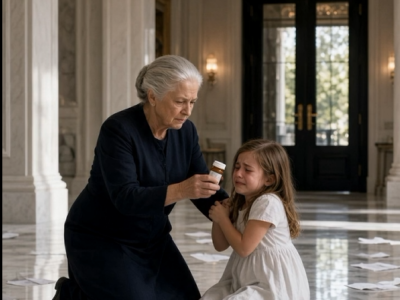
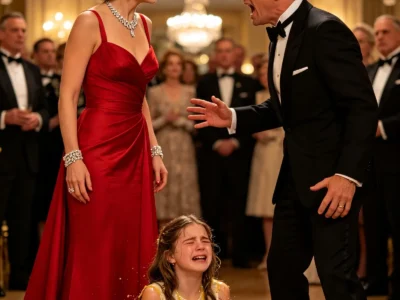
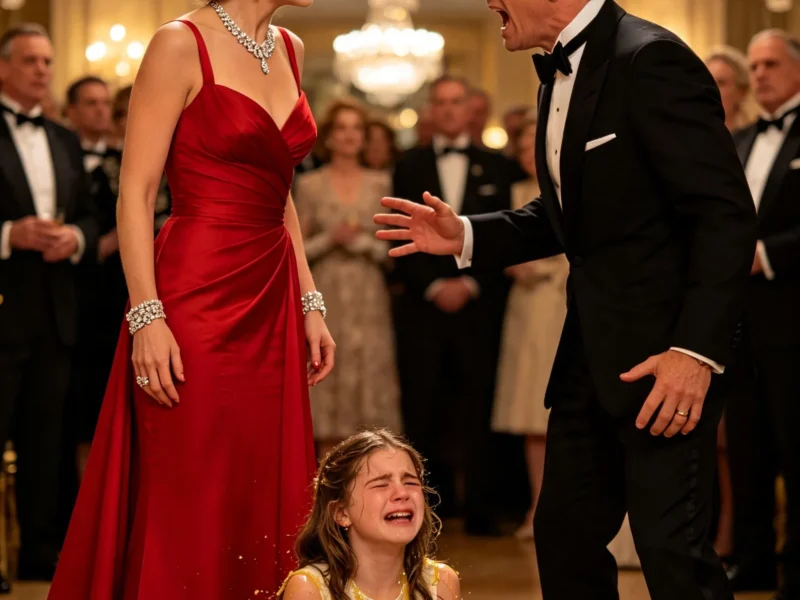
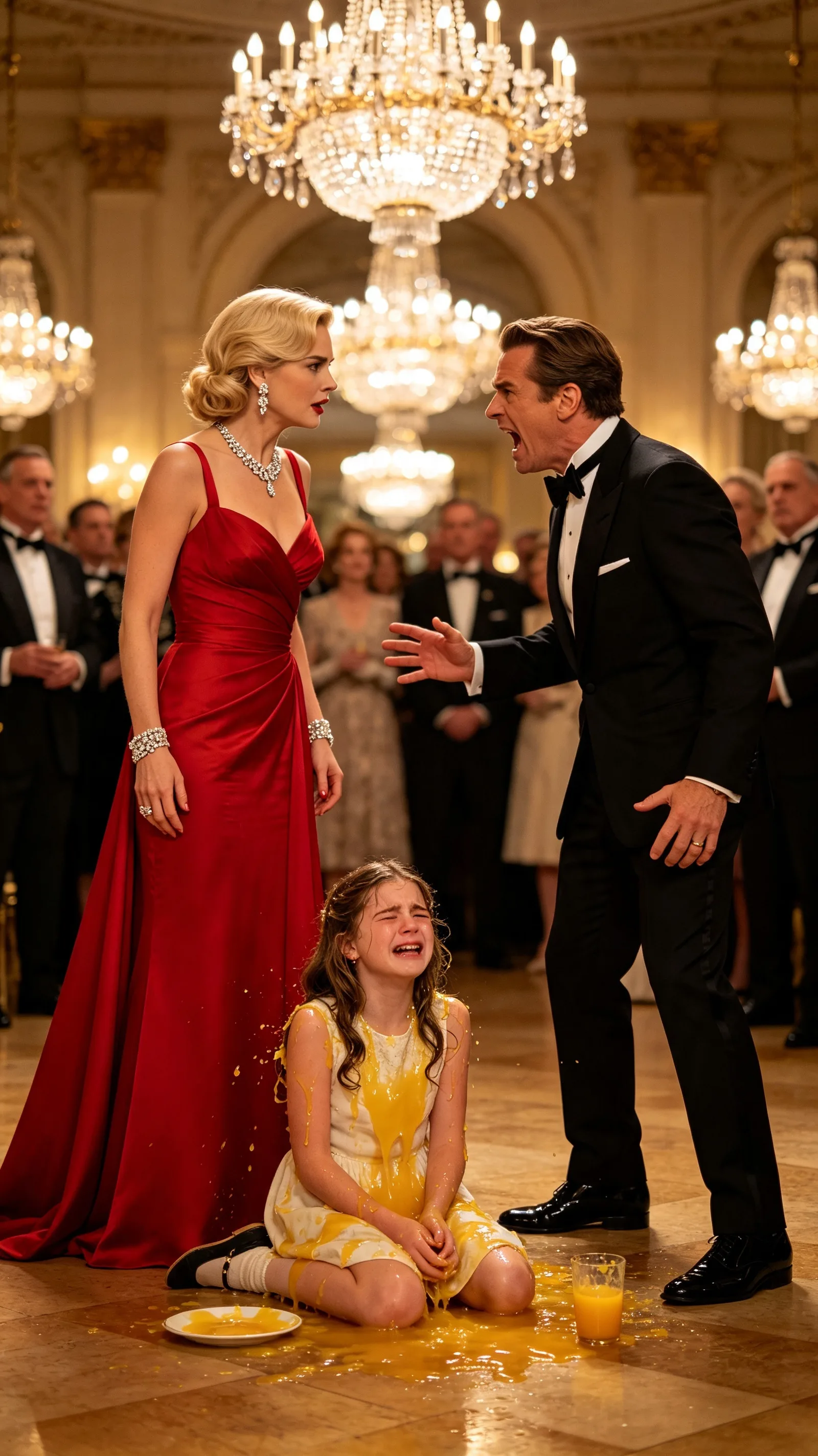
The ballroom at Ashcombe Manor had gone completely silent after Sage screamed, “Daddy!”
Gideon Kessler carried his crying daughter up the grand staircase while orange juice still dripped from her hair onto his shoulder, past nearly two hundred guests who had, until thirty seconds earlier, been laughing over champagne beneath the chandeliers his grandfather had imported from Vienna forty years before. He had known this child for less than forty-eight hours. And yet almost two hundred people downstairs had just taught her, in the space of a single humiliating moment, something Gideon had spent every one of those forty-eight hours trying to undo — that people could decide whether she belonged somewhere before they’d even learned her name.
He didn’t stop moving until he reached her room, one of the guest suites on the east wing that his housekeeper, Bernadette, had hurriedly made up two days earlier with a rush order of pale yellow bedding because six-year-olds, apparently, liked yellow. He sat on the edge of the bed with Sage still shaking against his chest, her small hands fisted in his jacket, sticky orange juice cooling in her hair, and said the only thing he could think to say that wasn’t a lie.
“You didn’t do anything wrong. Do you hear me? Not one single thing.”
Sage didn’t answer. She just cried harder, the specific, exhausted crying of a child who has learned, somewhere in six years he knew almost nothing about yet, that crying rarely changed anything and she was doing it anyway because there was nothing else left to do.
It took nearly twenty minutes to get her calm enough to change out of the ruined dress and into pajamas, another ten to get her to finally close her eyes, one small hand still curled around the strap of a battered gray suitcase she’d refused to let out of arm’s reach since the moment she arrived at Ashcombe Manor.
Gideon was standing outside her door, forehead pressed against the frame, when his head of security, Owen Faust, found him.
“Mr. Kessler,” Owen said, low enough not to wake her. “There’s something you need to see.”
Gideon expected another angle of the security footage from the ballroom — another view of the woman in the red dress who’d approached Sage by the drink table and, whether by accident or design, ended up dumping a full glass of orange juice over his daughter’s head in front of the entire party. He’d already watched that footage twice and felt something in him go cold and sharp both times.
Instead, Owen handed him a printed internal security log.
“Someone flagged Sage the moment she walked into the ballroom,” Owen said. “Before the woman in red ever got near her. Security was already moving to quietly escort an unidentified child away from the guest list. Standard protocol for an unrecognized minor at an event this size.”
“So why didn’t they?” Gideon asked, scanning the log.
“Because six minutes later, someone canceled the request.”
Gideon’s eyes found the line Owen was pointing to — a timestamp, a cancellation code, and beside it, an authorization level that only existed for a handful of names in the entire Kessler family security system.
Only four people alive had clearance to override a security escort inside Ashcombe Manor.
Gideon stared at the second column until the name resolved into something he didn’t want to be looking at.
One of them was his brother.
Chapter Two: Forty-Eight Hours
To understand what he was looking at, you’d have to go back to the Tuesday morning, forty-eight hours before that ballroom, when a woman Gideon had never met walked into his office at Kessler Holdings with a case file and a six-year-old girl holding tightly to her hand.
“Mr. Kessler,” the woman said, introducing herself as Priya Osei, a caseworker with Ravenswood County Child Services, “this is Sage. I believe you may be her biological father.”
Gideon remembered almost nothing about the next several minutes except the sound of his own heartbeat, and the girl’s eyes, which were, unmistakably, his mother’s eyes — the same pale gray-green he saw in the mirror every morning, staring back at him from a face that belonged to a stranger.
Elise Bramwell. He hadn’t heard that name in nearly seven years, not since a brief, quiet relationship during a stretch of his life he’d mostly stopped talking about — a woman he’d met at a conference in Ravenswood who’d never quite fit into the version of his life his family expected him to build, and who had, as far as he’d understood at the time, simply stopped returning his calls one autumn and disappeared from it entirely.
“She passed away four months ago,” Priya told him gently. “A car accident outside Millbrook Crossing. Sage has been in emergency foster placement since then while we tried to locate any biological family. Your name was listed on a private document Elise had filed with an attorney years ago — never finalized as a formal paternity claim, but enough for us to run a DNA comparison once we found it. The results came back Monday.”
Gideon had a daughter. He had had a daughter, apparently, for six years, and had not known it for a single day of them.
The next forty-eight hours blurred into a sequence of decisions made faster than any decision in his life had ever been made before — emergency custody paperwork, a scrambled call to his family attorney, a guest suite hastily prepared, and the far harder task of explaining, in a house full of people who had strong opinions about everything, that there was suddenly a six-year-old girl living in it who stood to inherit a share of everything the Kessler name represented.
His mother, Eleanor, had received the news with the particular icy composure she reserved for anything that threatened the tidiness of the family’s public image. His brother, Preston, had said almost nothing at all — a silence Gideon had, at the time, mistaken for shock rather than calculation.
The gala had been scheduled for months, a fundraiser for the Ravenswood Children’s Hospital that Gideon couldn’t cancel without drawing exactly the kind of attention he was trying to avoid before he’d even had time to process what having a daughter meant. He’d told himself bringing Sage down for twenty minutes, introducing her quietly to a handful of close family friends, would be manageable.
He had not accounted for a woman in a red dress, or for whoever had made sure security stood down and let her get close enough to try.
Chapter Three: Someone Answered Her Letters
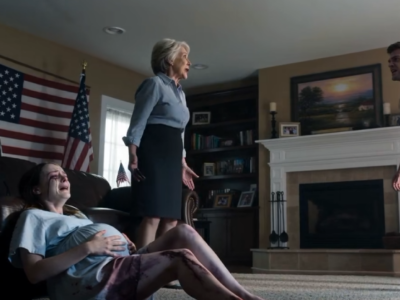
The gray suitcase sat untouched on the floor of Sage’s room for two more days before Gideon finally asked her, gently, if he could look inside it with her.
She said yes, on the condition that he sit on the floor with her rather than the bed, and together they went through it piece by piece — a few changes of clothes worn soft from washing, a stuffed rabbit missing one ear, a school photo of Elise from what looked like a decade earlier, and, tucked into a zippered inner pocket Gideon almost missed entirely, a thick bundle of envelopes tied together with a ribbon that had clearly been retied many times.
They were addressed to him. All of them. Dozens of letters spanning nearly six years, several with return-to-sender stamps, several more that appeared to have simply never been mailed at all, as though Elise had eventually stopped believing they’d reach him and kept writing them anyway.
He read the first one that night after Sage fell asleep, sitting alone in his study with his hands shaking. It was dated eight months after their relationship ended, and it told him, plainly and without asking anything of him, that she was pregnant, that she intended to raise the baby herself, and that she thought he deserved to know regardless of what he chose to do with the information.
He had never received it.
He spent the rest of the night reading the others, watching the tone shift across six years from hopeful to confused to, eventually, resigned — repeated attempts to call a number that, according to one letter, had “stopped working sometime last spring,” a certified letter she mentioned sending to his office that had apparently “come back unopened,” a final letter, dated just over a year earlier, that read simply: I don’t know why nothing I send ever reaches you. I have to believe, for Sage’s sake, that you would want to know her if you could. I just don’t understand anymore why you don’t.
Gideon didn’t sleep at all that night. By morning, he’d called Owen Faust and asked him to pull every phone record, mail log, and visitor log tied to Kessler Holdings and Ashcombe Manor going back seven years.
It took Owen four days to build the picture in full, and when he finally sat across from Gideon with the results, his expression was the particular careful blankness of someone about to deliver news they already knew would land badly.
“Your office number changed seven years ago,” Owen said. “Preston requested the change, through IT, the same month you and Ms. Bramwell stopped seeing each other. Mail addressed to you at the Manor from an unrecognized sender has been getting flagged and held for ‘security review’ by household staff for years — a policy Preston set up himself, officially for your protection.” Owen slid a folder across the desk. “Every piece of that mail was logged before being discarded. Elise Bramwell’s name appears on that log eleven times.”
Chapter Four: The Authorization Log
Gideon confronted his brother in the study two nights later, the same folder from Owen open on the desk between them, the letters from the gray suitcase stacked beside it.
Preston didn’t deny it immediately, which was somehow worse than if he had. He sat very still for a long moment, studying the folder without touching it, before finally saying, “I did what I thought was right for this family.”
“You intercepted a woman trying to tell me I had a daughter,” Gideon said. “For six years.”
“You were about to be named to the board,” Preston said, his voice climbing now, defensive in the particular way of someone who has spent a long time believing his own justification. “A messy paternity situation with a woman nobody in this family had ever heard of would have been a liability at exactly the wrong moment. I made a judgment call.”
“You made a judgment call about my daughter’s entire childhood,” Gideon said. “She spent six years without a father because you decided it was inconvenient for the board.”
“And now she’s here,” Preston snapped, “diluting a trust that took three generations to build, and you’re acting like I’m the villain for trying to protect what this family spent decades—”
“You canceled the security escort at the gala too,” Gideon said quietly, and watched something in Preston’s face falter for the first time. “Only four people had that authorization level. You knew that woman in red was going to make a scene. You let it happen.”
Preston didn’t answer that one directly, which told Gideon everything the silence needed to.
Their mother, Eleanor, who had been standing in the doorway longer than either of them had noticed, finally spoke. “Is that true, Preston?”
“Mother, you can’t possibly be taking his side over—”
“I asked you a direct question,” Eleanor said, and something in her voice — decades of practiced composure finally cracking under the weight of eleven intercepted letters — made even Preston go quiet.
Gideon didn’t need Preston’s confession spelled out any further. Between the mail logs, the phone number change, and the security authorization, there was more than enough for Kessler Holdings’ own board — the one Preston had claimed to be protecting — to review his conduct independently, and more than enough grounds, per family counsel, to remove him from any decision-making authority touching the family trust going forward.
The board review, when it convened two weeks later, was thorough and unambiguous. Preston retained his shares — the trust’s structure made stripping those outright legally difficult — but lost every operational role and every discretionary authority he’d held within the company and the household both, a fall from influence steep enough that even Eleanor, for all her instinct to protect the family’s image above almost everything else, didn’t argue for leniency.
Chapter Five: What Sage Kept
It took Sage longer than the board review to trust that Ashcombe Manor was somewhere she was allowed to actually be, rather than somewhere she was being temporarily tolerated.
Gideon didn’t push it. He’d read enough of Elise’s letters by then to understand, in fragments, the kind of mother she’d been — patient, steady, careful never to make Sage feel like an inconvenience even when money had clearly been tight in the years after she left Ravenswood. He tried, clumsily at first and then with more confidence, to build something similar, one ordinary day at a time rather than one grand gesture.
The gray suitcase stayed in Sage’s room, unpacked now into drawers and a small closet, but never fully put away — she kept it under her bed, still within reach, and Gideon eventually stopped trying to talk her out of it, understanding that six years of foster placements and one dead mother had taught her, reasonably, that homes could disappear without warning and suitcases couldn’t.
He read her the letters, eventually, a few at a time, once Priya Osei — who continued checking in monthly even after the formal custody arrangement was finalized — gently suggested it might help Sage understand that her mother had never stopped fighting for her to know him, even when it looked, for years, like nothing was working.
“She really tried that many times?” Sage asked one evening, sitting cross-legged on her bed with the ribbon-tied bundle between them.
“Eleven times that we know of,” Gideon said. “Probably more we’ll never find. She never gave up on getting you to me, Sage. Not once.”
Sage was quiet for a while, turning that over the way six-year-olds do, processing something too large to hold all at once. “Uncle Preston made it not work,” she finally said. It wasn’t a question.
“Yes,” Gideon said, because there was no version of that answer he was willing to soften for her. “He did. And he’s not going to have the chance to make decisions like that again.”
Eleanor, to Gideon’s genuine surprise, became one of Sage’s steadiest presences over the following months — not out of the same warmth he was slowly building himself, but out of something that looked, at least, like a determined effort to make up for the version of the family that had let this happen at all. She started Sunday visits, small and awkward at first, gradually settling into something closer to routine.
Chapter Six: Where Sage Belonged
The Ravenswood Children’s Hospital gala came around again the following year, and Gideon nearly canceled the family’s attendance entirely before Sage, seven years old now and considerably steadier than the girl who’d fled that ballroom in tears twelve months earlier, told him plainly that she wanted to go.
“I want to see it be different,” she said. “Not scary this time.”
He agreed, on the condition that she could leave the moment she wanted to, no explanation required, and that Owen Faust would be within arm’s reach of her the entire evening — a promise he intended to keep personally as much as through his security team.
The evening went, in the end, almost entirely unremarkably, which felt, to Gideon, like its own kind of quiet victory. Sage stood beside him near the entrance for the first twenty minutes, introduced this time not as an unexplained child trailing behind the family, but as his daughter, stated plainly to anyone who asked, with nothing left to hide and no one left with the authorization to make sure it went wrong.
A few guests remembered the scene from the year before and had the grace to say nothing about it. A few others, kinder, made a point of crouching down to properly introduce themselves to Sage this time, asking her name before assuming they already knew everything they needed to know about whether she belonged there.
Near the end of the evening, Sage tugged on Gideon’s sleeve and pointed toward the dessert table, where a woman was helping a much younger child pick out a cookie. “That’s what Owen said security is for now,” she said. “Making sure nobody decides someone doesn’t belong before they even ask.”
“That’s exactly what it’s for,” Gideon agreed.
Later that night, back at Ashcombe Manor, he found her sitting on her bedroom floor, the gray suitcase open beside her, adding the folded program from that evening’s gala to the bundle of her mother’s letters, tucking it in carefully like something worth keeping alongside everything else Elise had left her.
“You don’t have to keep everything in that suitcase anymore, you know,” Gideon said gently, sitting down beside her. “You have drawers. A whole closet. This is your home now, for as long as you want it to be.”
Sage considered that for a moment, then zipped the suitcase closed anyway, sliding it back under her bed within easy reach.
“I know,” she said. “I just like knowing it’s there. In case I ever need to remember where I came from.”
Gideon didn’t argue with that. He understood, better than he once had, that some things earn the right to stay close for as long as a person needs them to — and that home, for Sage, was never going to be about a suitcase at all, but about finally having somewhere worth keeping one.