(Part 2) They Expected Frozen Sisters — Instead They Found Fresh Bread and a Warm Floor at 40 Below
(Part 2) They Expected Frozen Sisters — Instead They Found Fresh Bread and a Warm Floor at 40 Below
.
.
Part 2: The Legacy of Warmth
The storm finally broke, leaving behind a landscape transformed by white. Days later, as the sun returned, the valley began to clear, revealing the resilience of the community that had taken refuge in the Brandt cabin. Deputy Miller, still in disbelief, stood at the threshold, witnessing the miraculous scene. The Madsen family, Preacher Davis, and others were alive, their faces glowing with warmth and hope.
But the world outside was still a harsh reminder of the winter’s wrath. As the days turned into weeks, the community began to rebuild, and the story of the Brandt sisters spread like wildfire. They were no longer seen as foolish; they had become symbols of survival and ingenuity.
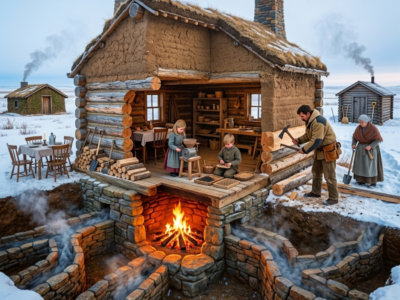
Miller, who had once feared the worst, found himself drawn to the sisters’ strength. He visited often, sharing stories and laughter, and he watched as the community rallied around them. The warmth of the clay oven became a gathering point, a beacon of hope in a world that had once seemed so bleak.
Yet, the shadows of doubt still lingered. Land agent Finch, who had predicted the sisters’ failure, rode up one day, his expression grim and purposeful. He was there to serve eviction notices, to declare the claim abandoned. But as he approached the cabin, he was met with a scene that shattered his expectations.
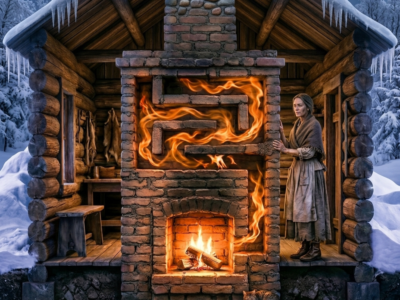
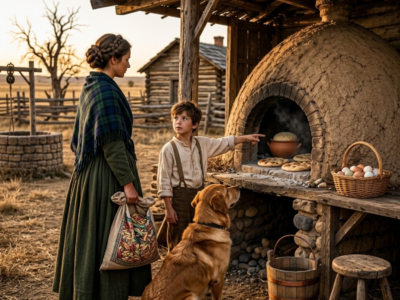
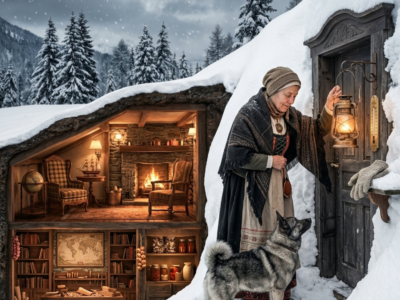
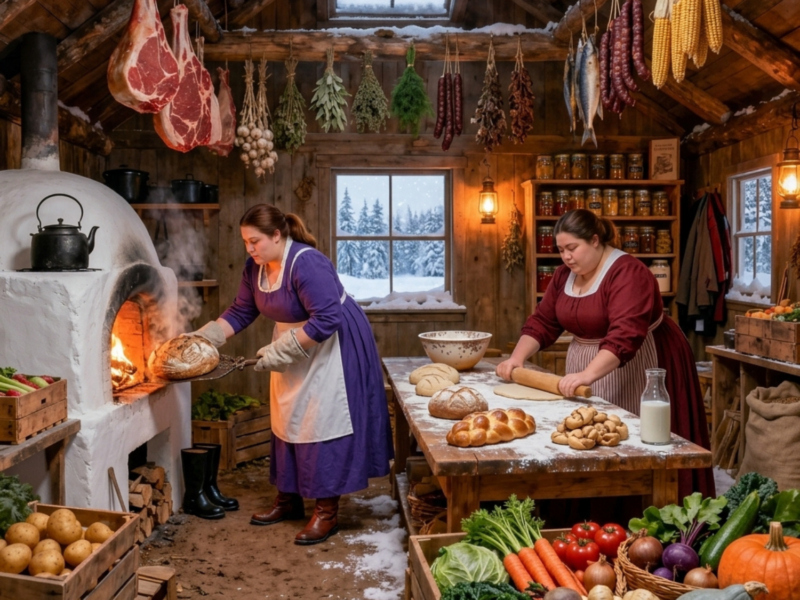
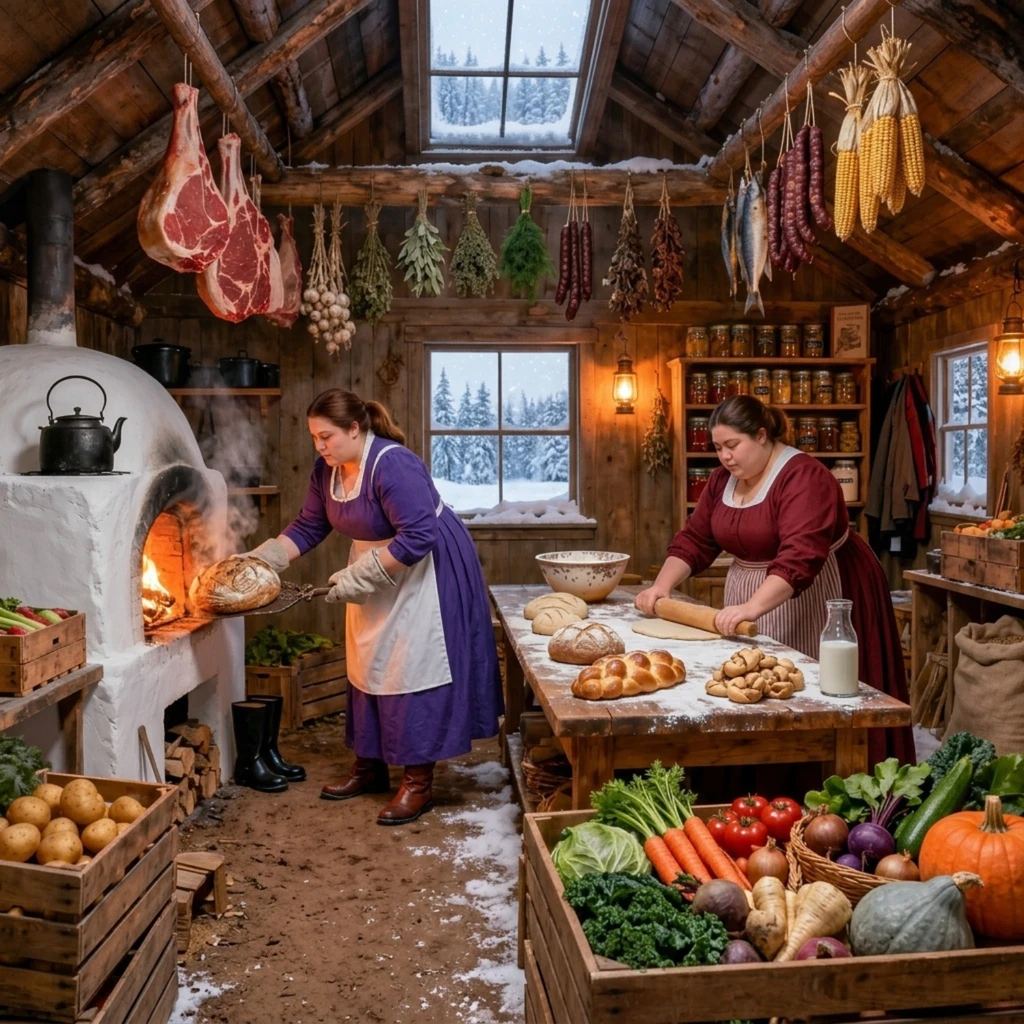
Inside, the warmth radiated from the clay oven, and the air was filled with the aroma of fresh bread and hearty soup. Finch stood at the threshold, his eyes sweeping over the room, taking in the life that had flourished against all odds. He saw the Madsens, Preacher Davis, and even young Ben, who had come to lend a hand, silently helping Gregor mix a new batch of clay.
Finch hesitated, his resolve wavering. He opened his ledger, prepared to make a note of the situation, but instead, he drew a firm black line through his previous entry. He handed Marta a new note, declaring the provisional status revoked. There were no apologies, just an acknowledgment of the truth he could no longer ignore.
The sisters had proven him wrong, and in doing so, they had forged a legacy that would resonate throughout the valley. As word spread, others came to learn from them, and under Gregor’s guidance, half a dozen masonry heaters were built before the next winter. The knowledge once mocked became the new wisdom, and the story of Brandt’s folly transformed into a tale of triumph.
As spring arrived, the valley blossomed with new life. Marta and Lena found joy in their work, but they also found love. Lena and Gregor, united by their shared competence, grew closer with each passing day. Their connection deepened, and by summer, they stood before the hearth that had brought them together, exchanging vows in a ceremony held by Preacher Davis.
Meanwhile, Marta found solace in the company of Thomas Madsen, who had also been touched by loss. Their bond grew stronger, and in the warmth of the clay oven, they discovered healing and hope. Their marriage was a testament to resilience, a promise of life that honored the memories of those they had lost.
As the years passed, the leather-bound notebook became a treasured heirloom. Marta passed it to Lena’s eldest daughter, who added new notes detailing the best firing times and clay ratios. The book thickened with knowledge, a legacy that would continue to guide future generations.
Barrow, the beloved brindle dog, lived a long and happy life, chasing rabbits and curling up by the warmest part of the bench. His passing marked the end of an era, but his memory lingered in the hearts of those who had known him. Thomas carved a simple stone for him, a tribute to a loyal companion.
Marta grew old, her hair turning the color of winter snow, but her hands remained warm. She witnessed her grandchildren grow, all raised in the steady warmth of the clay oven. On the last night of her life, surrounded by family, she asked her youngest great-granddaughter to help her to the oven.
With frail hands, she placed her palm against the smooth, warm clay, a distant smile gracing her lips. “The clay holds the heat,” she whispered, and in that moment, she felt the weight of generations behind her, the warmth of love and legacy enveloping her.
As she closed her eyes for the last time, the truth of her life echoed in the hearts of those she left behind. The clay held the heat, and it was more than just a physical warmth; it was a legacy of resilience, love, and survival.
In the quiet moments that followed, the family gathered around the hearth, the flickering flames casting shadows on the walls. They shared stories of Marta and Lena, of their struggles and triumphs, and of the warmth that had become their sanctuary against the cold.
What is a legacy? It is not merely a name etched in stone, but the quiet, persistent warmth that shields a family from the cold. It is the knowledge passed down through hands, the memory of voices whispering truths that span generations. The clay holds the heat, and in that warmth, they found not just survival, but a life worth living.
And so, the story of the Brandt sisters became a legend, whispered with reverence throughout the valley, a reminder that even in the coldest of winters, warmth can be found in the most unexpected places. The clay holds the heat, and the legacy of love and resilience would endure, lighting the way for those who came after.