(Part 2) They Called It the Coward’s Cabin — Until His Children Slept Barefoot in -40° Winter
(Part 2) They Called It the Coward’s Cabin — Until His Children Slept Barefoot in -40° Winter
.
.
Part 2: The Great Freeze
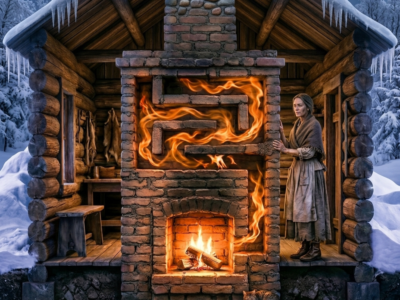
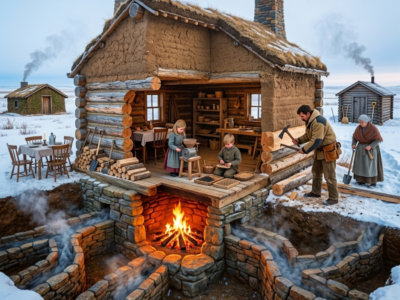
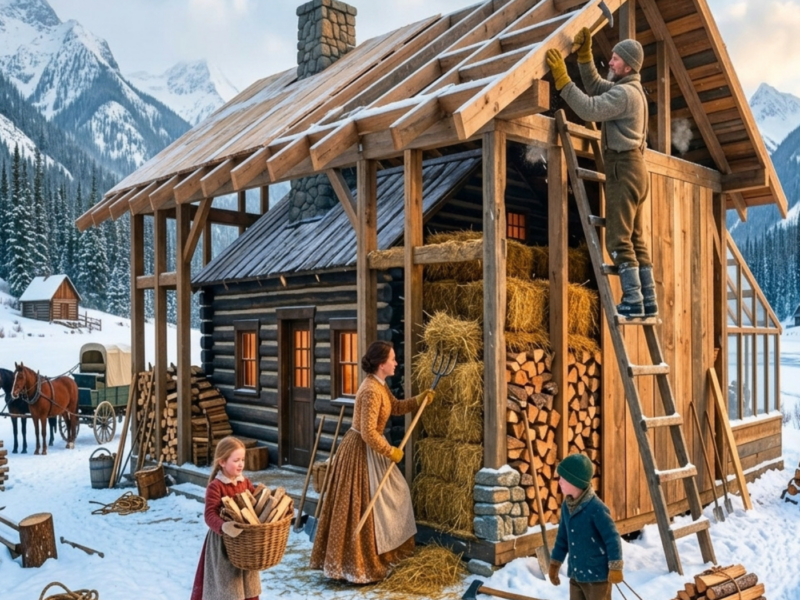
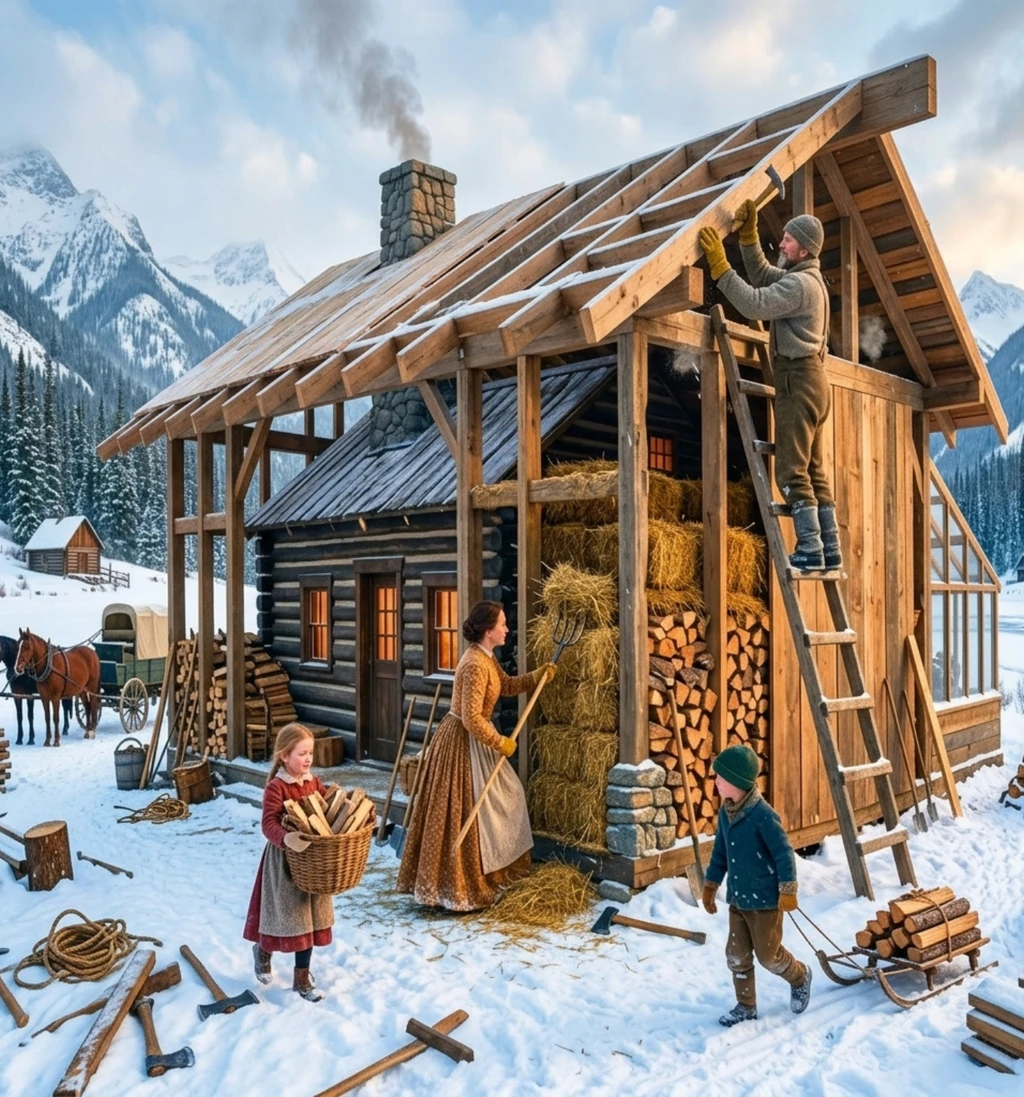
As winter descended upon Pinewood Valley, the temperature plummeted. By December 1st, the thermometer read a staggering minus 41 degrees. The wind howled like a beast, and the snow fell relentlessly. Inside the Halvorson cabin, however, a different story unfolded. The temperature remained a cozy 68 degrees, thanks to Eric’s unconventional design.
Greta found herself marveling at the warmth that enveloped them. She could walk barefoot on the wooden floor, a luxury that felt foreign after the harsh winters they had endured. The blizzard that hit on December 16th was fierce, yet within the walls of their home, the family felt safe. Eric had built a fortress against the cold, and it was working.
Meanwhile, the Doyles, who had mocked Eric’s efforts, were not faring as well. Hank Doyle had run out of seasoned wood and was burning green pine, filling his cabin with smoke and creating a dangerous situation. His wife, Martha, and their children huddled around the dying stove, shivering and coughing, while Hank’s pride kept him from asking for help.
On the night of December 18th, a chimney fire ignited in the Doyle cabin, and Hank realized the gravity of his situation. With his family in peril, he fought through the storm to reach the Halvorsons. When he knocked on their door, Greta welcomed him without hesitation, offering warmth and comfort. Eric quickly prepared to help Hank’s family, taking a sled loaded with blankets and warm bricks to the Doyle cabin.
As he drove through the storm, Eric’s heart raced. He knew that time was of the essence. When he arrived, he found Martha lying weakly in bed, her fever rising. With determination, Eric wrapped her in blankets and took her back to the Halvorson cabin, where Greta tended to her with care.
For three days, Greta nursed Martha back to health, while Hank sat in the corner, guilt-ridden and silent. When Martha finally opened her eyes, the relief was palpable. Hank, overwhelmed with emotion, realized the depth of Eric’s sacrifice and the strength of his character. He had once ridiculed the man for building a coward’s cabin, but now he understood the truth: it was a sanctuary, a place of safety.
The following Sunday, the church was filled with tension as Greta and Eric entered, heads held high. The whispers began again, but this time they were met with a collective silence. Eleanor Brennan stood up, breaking the ice, and confessed her own prejudices against Greta and Eric. She spoke of her husband Walter’s transformation after witnessing the warmth of the Halvorson cabin.
As the congregation listened, the atmosphere shifted. Greta shared the story of Henrik, their lost son, and how Eric’s determination to protect their children had led to the creation of the cabin. The women in the church began to understand the love that had driven Eric to build what they once mocked.
In the weeks that followed, the valley began to change. Hank Doyle became an advocate for the Halvorson wall, sharing his experience with others. Families began to seek Eric’s guidance, and he willingly taught them how to build their own versions of the double-walled cabin. The community that had once scorned him now rallied around him, united in their desire to protect their families from the unforgiving cold.
As the winter wore on, the valley faced one of the harshest seasons on record, but not a single child from the families who had built the Halvorson wall succumbed to the cold. Word spread far and wide, reaching neighboring valleys and towns. Eric’s design became known as the Norwegian method, a beacon of hope for families in cold climates.
In the spring of 1924, the truth of Eric’s work was undeniable. The valley had lost livestock and some children, but none from the families who had embraced his teachings. The community began to heal, and people like Walter Brennan, who had once doubted Eric, sought his knowledge and friendship.
When Mr. Pemberton, the county agricultural extension agent, returned to the valley, he brought with him a manuscript detailing Eric’s work. The government recognized the significance of the Halvorson wall, and soon it was being distributed across several states. Eric never sought credit or profit; he simply wanted to share what he had learned.
As the years passed, the Halvorson cabin stood as a testament to love, resilience, and the quiet strength of a father who would do anything to protect his family. Eric Halvorson lived a long, fulfilling life, surrounded by the warmth of his loved ones, never forgetting the lessons learned from the harsh winters of his past.
Greta often reflected on the journey they had taken together, from the ridicule of their neighbors to the respect they had earned. She knew that their love had built something far greater than a cabin; it had forged a community bound by understanding and compassion.
In the end, the greatest stories are not always about the loudest voices or the grandest gestures. Sometimes, they are found in the quiet strength of a man who built a wall against the cold, ensuring that love would always prevail. The Halvorson cabin remained a symbol of hope, warmth, and the enduring power of family—a legacy that would last for generations to come.