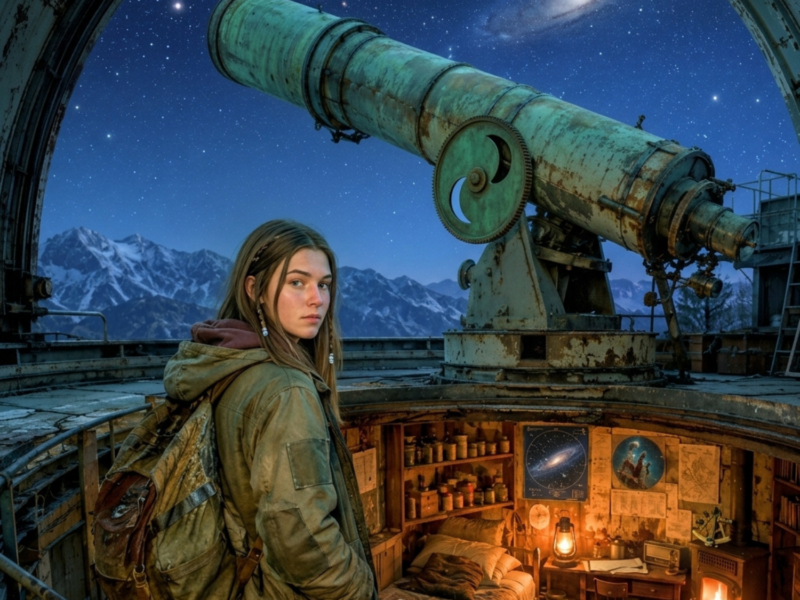
(Part 2) The Drifter Girl Climbed the Forgotten Observatory — And Found a Home Beneath the Telescope
(Part 2) The Drifter Girl Climbed the Forgotten Observatory — And Found a Home Beneath the Telescope
.
.
Part 2: The Legacy
The days turned into weeks, and the nights in the observatory became a routine that Monica cherished. Each evening, she would light the lanterns, prepare the telescope, and wait for the stars to emerge against the dark canvas of the sky. Each visitor brought new life to the old observatory, and with every shared experience, Monica felt a connection to the past that deepened her resolve to preserve the place.
As autumn gave way to winter, the air grew crisp and cold, and the mountain transformed into a silent wonderland. Snow blanketed the ground, and the stars shone brighter than ever. Monica continued to study the journals, absorbing the astronomer’s meticulous observations and reflections. She felt as if she were walking alongside him, sharing in his discoveries and dreams.
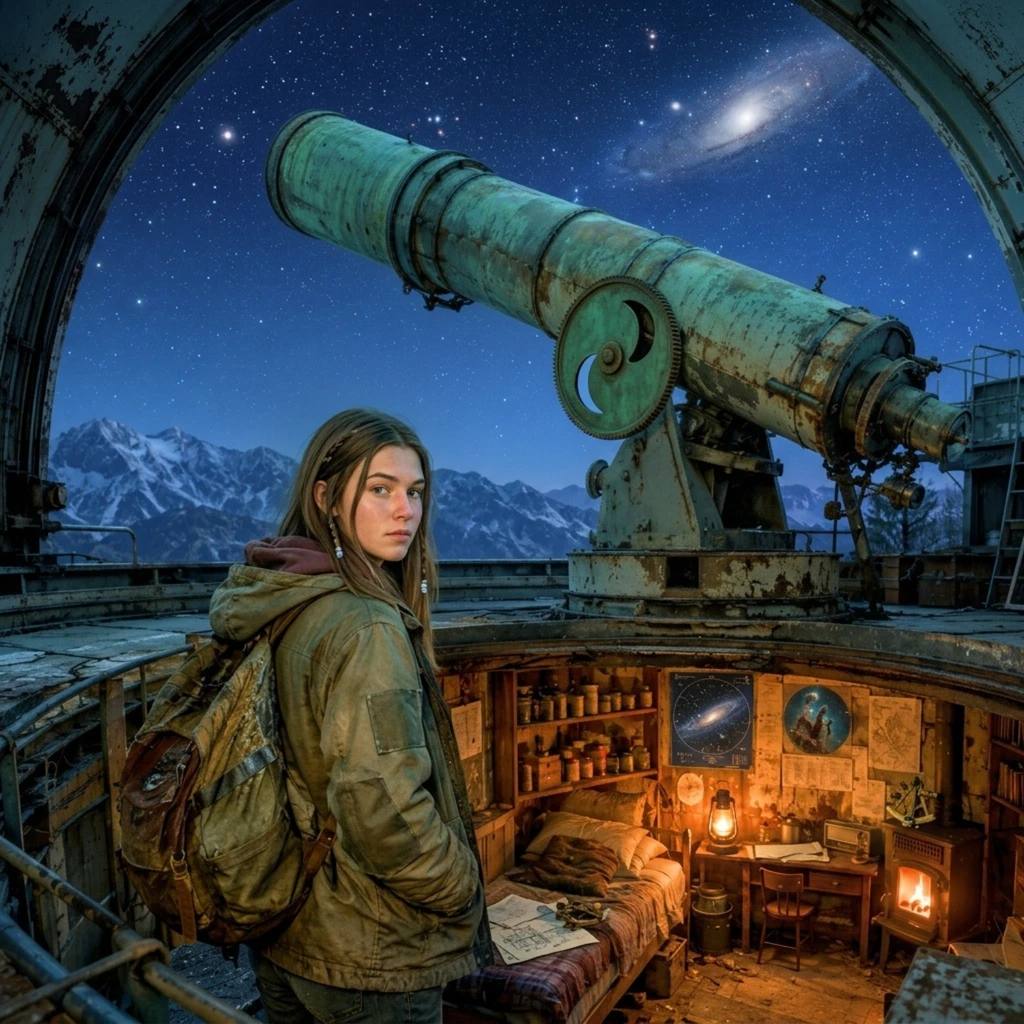
One evening, after a particularly busy night of stargazing, Monica sat at the desk, the lantern flickering softly beside her. She opened the fifth journal again, reading the last entry about the veil holding clear to the east. The words resonated deeply, and she felt a sense of urgency to continue his work, to carry on the legacy he had left behind.
With the arrival of the new year, Monica began to plan for the future of the observatory. She envisioned a series of community events, workshops, and educational programs designed to engage the local population and inspire a new generation of stargazers and explorers. She wanted to share the magic of the cosmos with others, just as the astronomer had once done, and she believed that the observatory could become a hub for learning and discovery.
Monica spent her days gathering resources and reaching out to local schools and community centers to promote her vision. She created flyers detailing upcoming events, emphasizing the importance of understanding the night sky and the wonders it held. The response was overwhelmingly positive; teachers expressed excitement about bringing their students for field trips, and families looked forward to weekend stargazing sessions.
As winter progressed, Monica organized her first official event—a community stargazing night. She meticulously prepared, ensuring the telescope was in perfect working order, the lanterns were filled with kerosene, and the space was tidy and welcoming. She even baked a batch of cookies, a small gesture to make visitors feel at home.
On the night of the event, the sky was clear, and the stars twinkled like diamonds scattered across velvet. Monica felt a mix of excitement and nervousness as people began to arrive, their faces illuminated by the soft glow of lantern light. Families, couples, and curious individuals gathered, all eager to share in the experience of observing the universe.
As she welcomed each guest, Monica felt a warmth spreading through her. She guided them to the telescope, explaining how to use it and what celestial bodies they might see. She pointed out constellations, shared stories about the stars, and encouraged questions. Laughter and awe filled the air as children and adults alike marveled at the beauty of the night sky.
That evening, as Monica looked through the telescope at Saturn, she felt a profound connection to the astronomer who had once stood in this very spot. She imagined him sharing his passion with others, just as she was doing now. It was a moment of realization—she was not just preserving his legacy; she was living it.
After the last guests left, Monica stood outside, gazing up at the stars. The observatory felt alive, filled with energy and purpose. She knew that this was just the beginning. Inspired by the success of the event, she began to plan more gatherings, including workshops on astrophotography, lectures on astronomy, and even family nights where children could learn about the science of the stars through fun activities.
As the months passed, the observatory became a beloved part of the community. People returned, bringing friends and family, eager to share the experience with others. Monica found herself immersed in a world of learning and exploration, and she reveled in the joy of teaching others about the cosmos.
Yet, despite the growing success, there was still something lingering in the back of her mind—the tin box beneath the bed, filled with the astronomer’s journals. She had resisted the urge to pry into its contents, feeling that there was a time for everything. But now, as the observatory thrived, she felt a pull to uncover the secrets it held.
One quiet afternoon, she finally decided to open the box. She set it on the desk, the lantern casting a warm glow over it. As she unlatched the clasp, her heart raced with anticipation. Inside, she found seven small journals, clothbound and stacked neatly. The sight of them sent a thrill through her. Each journal was a window into the mind of the man who had built this observatory, and she was eager to dive into his thoughts.
Monica picked up the first journal and opened it to the first page. The handwriting was meticulous, each letter formed with care. As she read through the entries, she found detailed accounts of his observations, personal reflections on his work, and notes about the challenges he faced. He wrote about the beauty of the stars, the thrill of discovery, and the loneliness that sometimes accompanied his passion.
One entry caught her attention in particular. It described a moment of pure joy when he had successfully tracked a star cluster for the first time. He wrote about the exhilaration of connecting with something so vast and ancient, something that had been there long before him and would continue to exist long after he was gone. Monica felt a kinship with him, understanding the depth of emotion that came with such a profound connection to the universe.
As she moved through the journals, she discovered something else—his struggles. He wrote about the frustrations of isolation, the difficulty of maintaining the observatory, and the doubts that crept in during the long nights spent alone. But through it all, he remained steadfast in his dedication to his work. His passion was a beacon, guiding him through the darkest moments.
Monica realized that she was not only reading about his life but also learning from it. His experiences mirrored her own journey, and she felt empowered to continue the work he had started. Inspired by his resilience, she committed herself to ensuring that the observatory would not only survive but thrive.
With renewed determination, she decided to organize a special event—a celebration of the observatory’s legacy. She envisioned an evening dedicated to the astronomer, where she would share his story with the community and honor his contributions. It would be a night of storytelling, stargazing, and connection, reminding everyone of the importance of pursuing their passions and sharing them with others.
As the date approached, Monica poured her heart into the preparations. She reached out to local historians, inviting them to share any information they had about the astronomer and his work. She even contacted the families of the original settlers in the valley, hoping to gather stories that would enrich the evening.
On the night of the event, the observatory was filled with warmth and laughter. The lanterns cast a soft glow, illuminating the faces of those who had come to celebrate. Monica stood at the front, her heart racing with excitement as she shared the story of the astronomer—the man who had built the observatory, who had gazed at the stars with wonder, and who had left behind a legacy that would inspire generations.
As she spoke, she saw the spark of curiosity in the eyes of her audience. They were captivated by the tales of discovery and the challenges he faced. When she finished, she invited everyone outside to gaze at the stars, just as he had done so many years ago.
The night sky was clear, and the stars twinkled brightly above. Monica guided her guests to the telescope, encouraging them to look through the lens and see the wonders of the universe. Laughter and exclamations of awe filled the air as people took turns observing the celestial bodies.
As the evening wore on, Monica felt a sense of fulfillment wash over her. She had not only honored the astronomer’s legacy but had also created a space for community and connection. The observatory had become a place where people could come together, share their love for the stars, and inspire one another.
In the weeks that followed, the observatory continued to flourish. Monica received letters from visitors expressing their gratitude for the experiences they had shared. Many of them returned, bringing friends and family, eager to experience the magic of the night sky once more.
Yet, even amidst the joy of success, Monica felt a lingering curiosity about the remaining journals in the tin box. She knew there was more to discover, more insights to glean from the astronomer’s life. One rainy afternoon, she decided it was time to delve deeper into the remaining journals.
As she opened the sixth journal, she noticed a shift in the tone of the entries. The handwriting was still precise, but the words felt heavier, more deliberate. The entries detailed the astronomer’s declining health, his struggles with aging, and the realization that his time was limited. Yet, even in those somber reflections, there was a sense of acceptance and peace.
He wrote about the beauty of the stars and how they had always been his solace. He expressed gratitude for the life he had lived, for the moments of connection he had experienced, and for the legacy he would leave behind. Monica felt a deep sense of respect for him as she read his words, understanding the weight of his journey.
One entry struck her profoundly. He wrote about the importance of sharing knowledge and inspiring others to look up at the stars. He believed that the universe was a gift, and that gift was meant to be shared. Monica felt a surge of determination as she absorbed his thoughts, knowing that she had a responsibility to continue his mission.
With each journal she read, Monica felt a growing sense of purpose. She realized that the observatory was not just a building; it was a vessel for dreams, a place where people could connect with the cosmos and with each other. She made a promise to herself that she would dedicate her life to keeping the observatory alive, to sharing the wonders of the universe, and to honoring the legacy of the man who had built it.
As spring approached, Monica began to implement her plans for the future. She organized workshops for children, teaching them about the stars and the science behind astronomy. She invited local experts to give talks, fostering a spirit of collaboration and learning. The observatory became a hub of activity, filled with laughter, curiosity, and a shared sense of wonder.
On one particularly clear night, Monica hosted a special event called “Under the Stars.” Families gathered with blankets and snacks, settling in for an evening of storytelling and stargazing. As she shared tales of constellations and the myths behind them, she felt the joy radiating from her audience. The children’s eyes sparkled with excitement, and she knew she was making a difference.
As the night wore on, Monica led everyone outside to gaze up at the sky. She felt a sense of fulfillment wash over her as she watched families marvel at the stars, just as she had done when she first arrived at the observatory. It was a moment of connection—a reminder that the universe was vast and beautiful, and that they were all part of something greater.
The observatory continued to thrive, and Monica found herself increasingly involved in the community. She collaborated with local schools to create educational programs, encouraging young minds to explore the wonders of the universe. She became a mentor to aspiring astronomers, sharing her knowledge and passion with those eager to learn.
As the seasons changed, Monica often returned to the journals, finding new insights and inspiration within their pages. She felt a deep sense of gratitude for the astronomer who had come before her, whose determination and passion had paved the way for her own journey.
One evening, as she sat by the lantern, reading the final journal, she came across an entry that made her heart swell with emotion. It was a reflection on legacy, on the importance of passing down knowledge and inspiring future generations. He wrote, “The stars are not just for the solitary observer; they are for all who dare to look up and dream.”
Monica closed the journal, tears in her eyes. She understood the weight of his words and the responsibility that came with them. She had not only inherited the observatory; she had inherited a mission—a commitment to keep the spirit of exploration alive.
With that realization, Monica made a vow. She would dedicate her life to the observatory, ensuring it remained a beacon of hope and inspiration for all who sought to understand the cosmos. She would continue to share the stories of the stars, to foster a sense of community, and to honor the legacy of the man who had once gazed at the same sky with wonder.
As she stepped outside, the night sky unfolded before her, a tapestry of stars shimmering in the darkness. Monica felt a sense of peace wash over her. She was not alone; she was part of a continuum—a thread woven into the fabric of the universe. With each breath, she felt the weight of the past and the promise of the future intertwine, and she knew that her journey was just beginning.
The observatory stood tall against the backdrop of the night, a testament to the power of dreams and the beauty of connection. And as Monica gazed up at the stars, she felt a sense of belonging, a sense that she was exactly where she was meant to be—underneath a sky that did not move, but instead held the potential for endless exploration and discovery.