(Part 2) She Squeezed Into a 20-Foot Crack to Escape the Storm—The Walls Opened Into a Frozen Cathedral
(Part 2) She Squeezed Into a 20-Foot Crack to Escape the Storm—The Walls Opened Into a Frozen Cathedral
.
.
Part 2: The Change in the Valley
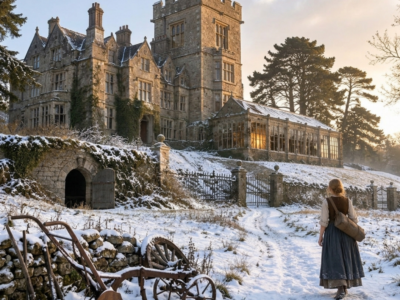
As winter deepened, the cold became a relentless adversary, testing the resolve of every family in Corbin’s Gap. The once-bustling valley became a landscape of isolation, with families holed up in their homes, struggling against the frigid temperatures. The frost crept into every corner, claiming livestock and threatening the very fabric of their lives. Silas Blackwood’s grand house, once a symbol of wealth and power, became a prison of cold, with frost creeping up the windows and the firewood dwindling alarmingly.
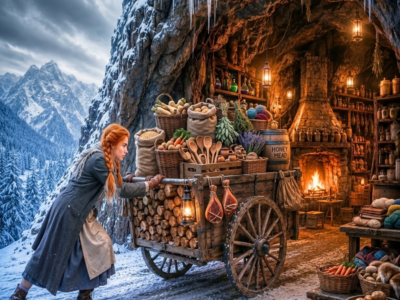
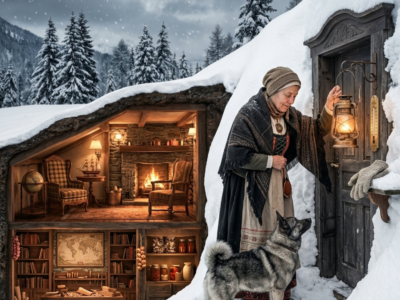
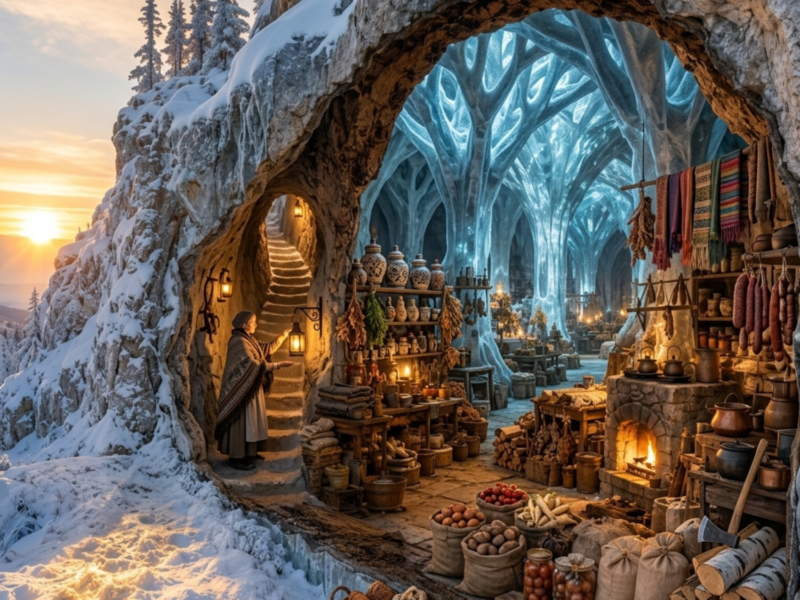
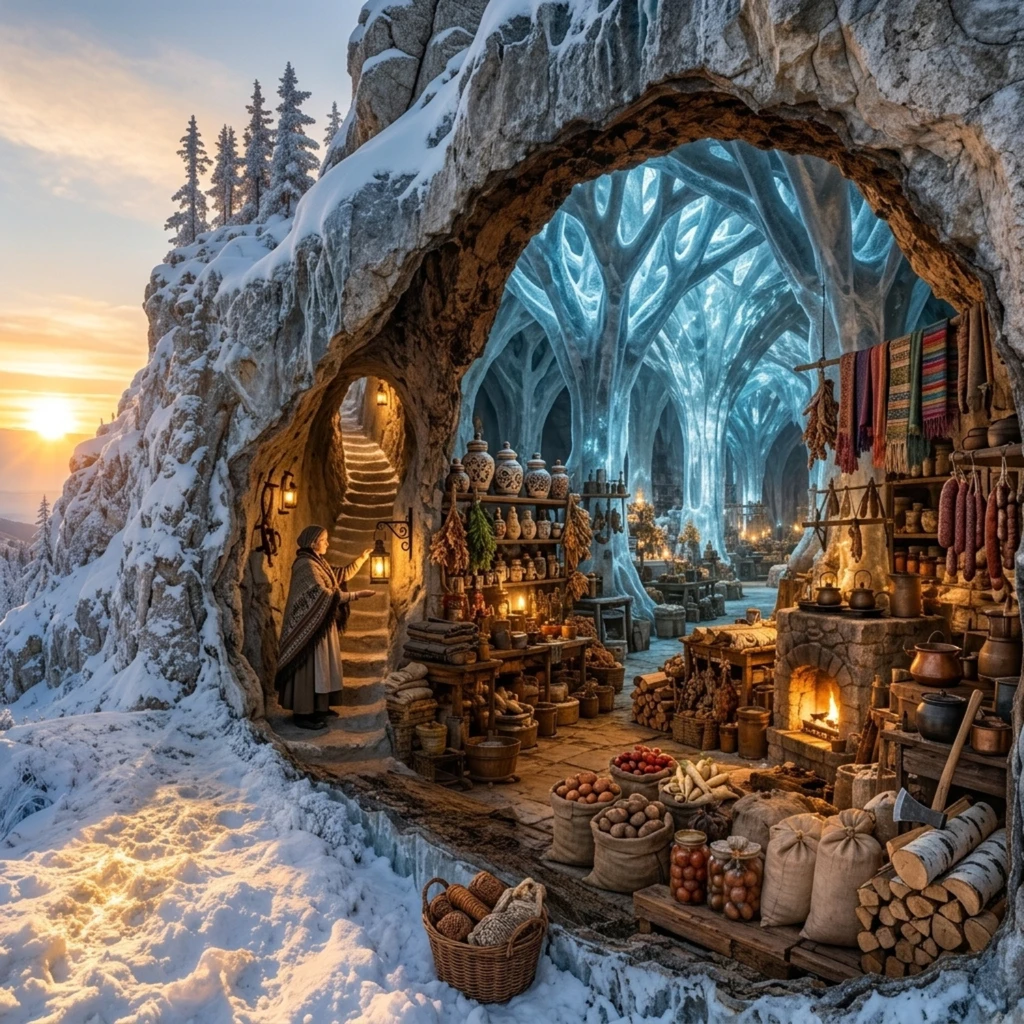
Meanwhile, Margaret continued her life in the stone chamber, where the temperature remained a cozy 64°F, a stark contrast to the bitter cold outside. She had not only survived the winter; she had thrived. Her small fire warmed her meals, and she found comfort in the solitude of her rock-hewn home. The deeper she delved into her work, the more she understood the earth’s secrets, the more she felt a connection to her father and the knowledge he had imparted to her.
As January wore on, the valley faced its harshest trials. The temperature plummeted to record lows, and the cold seeped into the very bones of the townsfolk. Silas Blackwood, once so confident in his predictions, found himself humbled. Families began to lose livestock, and the community’s resources dwindled. The reverend, once a pillar of strength, wrapped himself in blankets, struggling to write sermons as his ink froze. The mill, a lifeline for many, fell silent as the creek froze solid.
In the midst of this chaos, a desperate knock echoed through the valley one stormy night. John Webb, a local farmer, stood at the entrance of Margaret’s stone passage, clutching his feverish son, Caleb, wrapped in a tattered quilt. The boy was pale, shivering, and in desperate need of warmth. Without hesitation, Margaret ushered them inside, her heart filled with compassion and purpose.
As John entered the chamber, he was met with a warmth that felt like a miracle. The stark contrast between the raging blizzard outside and the cozy sanctuary within left him speechless. Margaret quickly laid Caleb on her bed of pine boughs, wrapping him in her warmest blankets. She prepared hot broth and tended to the boy, explaining to John the principles of thermal mass and the workings of her stone stove.
For three days, the Web family stayed with Margaret, their lives intertwined in a shared battle against the cold. As Caleb’s fever broke, John absorbed every lesson Margaret taught him. The knowledge she shared was not merely about survival; it was a lifeline, a way to reclaim their lives from the clutches of winter. Word spread quickly through the valley, and soon others came seeking refuge and advice.
Families arrived at Margaret’s door, not for shelter but for knowledge. A farmer whose well had frozen, a couple whose cabin was failing—each found solace and solutions within her stone walls. Margaret became the heart of a growing community, teaching those who sought her wisdom. She refused to be a mere charity; instead, she empowered others, sharing the knowledge that had become her greatest asset.
As the cold continued to ravage the valley, Silas Blackwood, too proud to ask for help, found himself facing a crisis of his own. His barn, once a bastion of livestock, was failing under the relentless assault of winter. With two prize mares in danger of freezing, he was forced to confront his own vulnerability. The man who had once scorned Margaret now stood at the threshold of her sanctuary, humbled and desperate.
“Miss Harding,” he began, his voice rough with the strain of the season. He did not meet her gaze, a sign of his humility. “My barn, the big one. I have two prize mares in there, but the cold… it’s getting in. I’ve lost one already. The other won’t survive the night if it’s born in this.”
Margaret listened, her expression calm and unyielding. She could have turned him away, could have reminded him of his scorn, but she chose not to. Instead, she offered practical advice, the same guidance she had given to others. “You need to bank it,” she instructed, her tone steady. “Use manure and straw, pack it deep around the foundation. It will hold the earth’s heat in.”
As Silas absorbed her words, a shift occurred. The knowledge she possessed was no longer dismissed; it was recognized as a form of wealth. The valley had undergone a transformation, and Margaret Harding had become its quiet center. The very principles that had once marked her as an eccentric were now sought after by those who had once scorned her.
By spring, as the thaw began to melt away the harsh winter, Margaret’s position in the valley was unassailable. The stories of her resilience and knowledge spread like wildfire. Families who had once doubted her now sought her guidance and expertise. The Harding property, once seen as a burden, became a beacon of hope and survival.
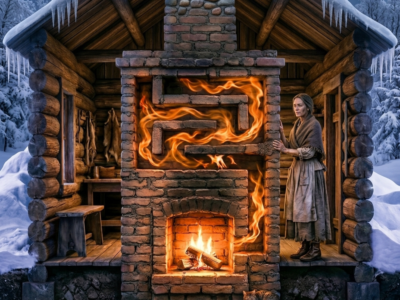
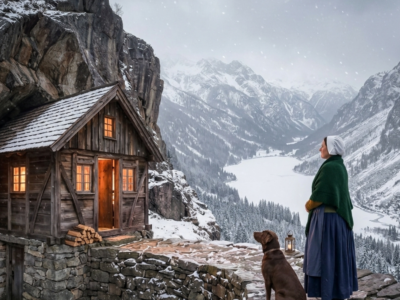
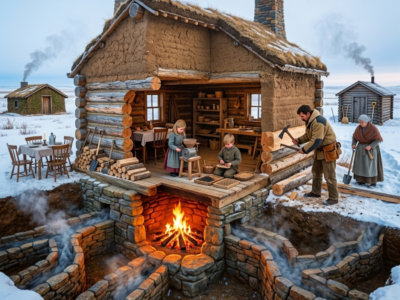
Margaret continued to refine her designs, improving the ventilation of her stone chamber and building a small root cellar deeper within the rock. With the help of John Webb and his sons, she constructed a modest house over the entrance to her life’s work, incorporating the principles she had perfected. The house became known as the warmest in the county, a testament to her ingenuity and perseverance.
As the years passed, Margaret Harding became a legend in her own right. She never sought fame or recognition, choosing instead to share her knowledge freely with anyone willing to listen. The Harding Seller became a feature on farms throughout the region, a symbol of survival and resilience in the face of adversity.
In 1895, a writer from a Knoxville newspaper sought her out, eager to document her story. He spent two days with her, meticulously mapping the chamber and interviewing the families she had helped. He offered to make her famous, to share her story with the world. But Margaret, ever humble, declined. “The knowledge doesn’t belong to me,” she said simply. “It belongs to the stone. It’s for anyone who is willing to listen.”
As the valley continued to change, the story of the woman who lived in a cave became a piece of local folklore, a tale passed down through generations. Margaret Harding lived to be 74, her life intertwined with the land she loved. She never married, finding fulfillment in her work and the quiet companionship of the earth.
When she passed away on a mild night in March, the entire valley mourned. Her legacy endured, a testament to the power of knowledge, resilience, and the unbreakable bond between a woman and the land she called home. Decades later, a young geology student stumbled upon the remnants of her life, discovering the hidden door to her sanctuary, still holding the warmth of the sun long after everyone had forgotten.
Margaret Harding’s story became a lasting reminder that true wealth lies not in material possessions but in the knowledge we share and the connections we forge with the world around us.