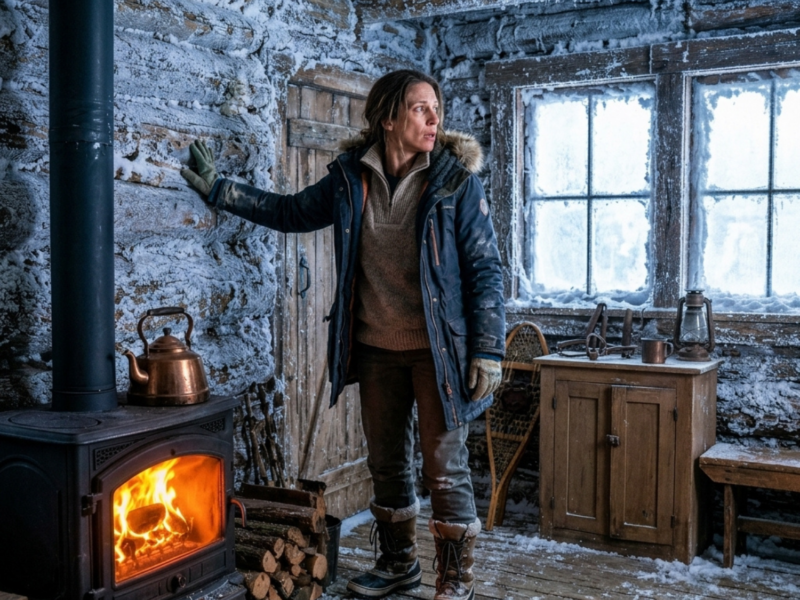
(Part 2) She Smeared Wet Freezing Mud on Her Cabin Walls — Unaware It Created a Windproof Winter Shell
(Part 2) She Smeared Wet Freezing Mud on Her Cabin Walls — Unaware It Created a Windproof Winter Shell
.
.
Part 2: The Price of Survival
On the morning of her seventh day in isolation, Cora awoke with a dull, throbbing ache behind her eyes. A heavy lethargy clung to her muscles, and as she stood up, a wave of dizziness washed over her. The cabin, though warm and cozy, felt increasingly suffocating.
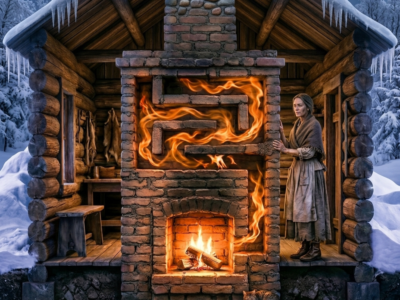
As she stumbled toward the wood stove, she noticed the flame flickering weakly, burning with a sickly blue hue. Panic surged through her as she recalled her Earth science lessons. Fire requires oxygen to burn, and she realized her cabin had become an airtight vacuum. The heavy clay she had packed into every crack and crevice had sealed her in, trapping the finite supply of oxygen.
Cora’s heart raced as she scrambled toward the front door, but it wouldn’t budge. The moisture from the clay had frozen solid, fusing the door shut. She staggered to the window, but it too was locked tight, sealed by the same frozen mud. Her vision began to narrow, and she felt herself growing weaker.
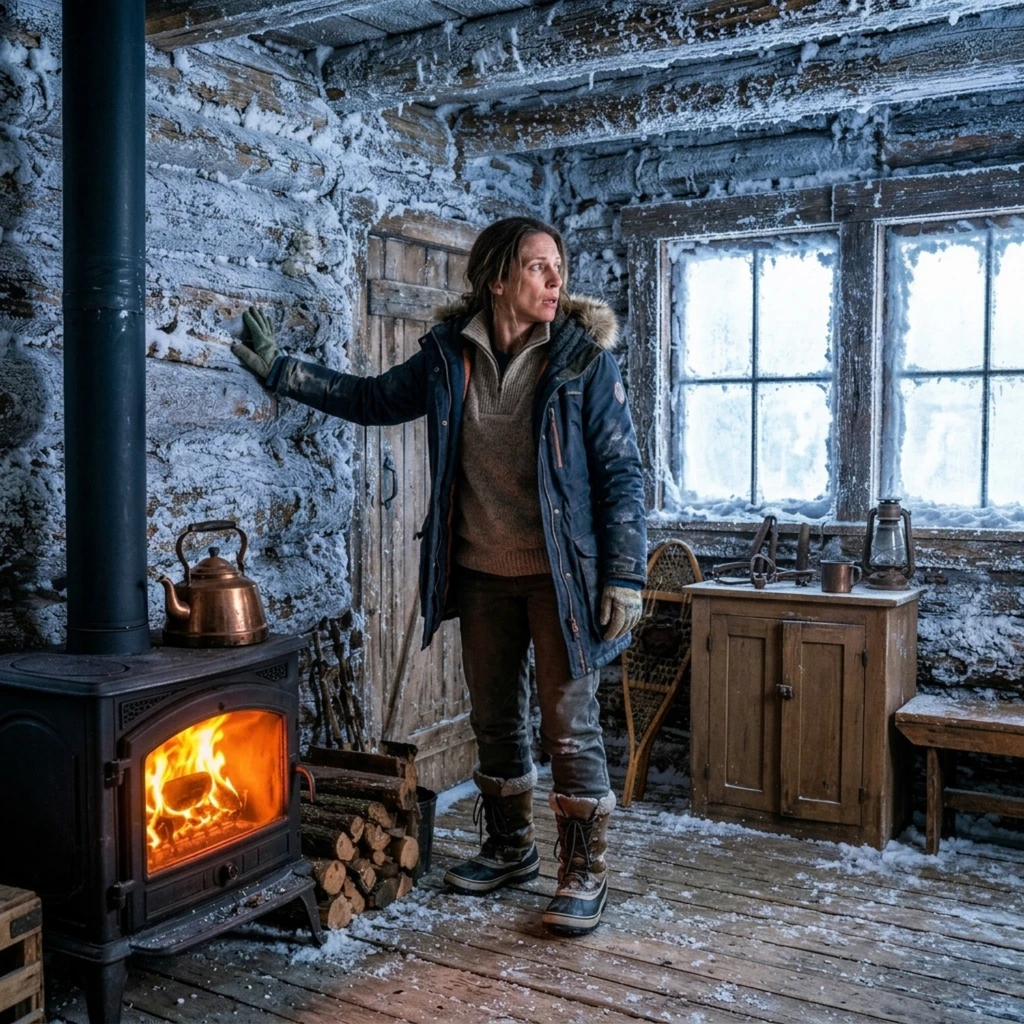
Desperate, she grabbed the heavy iron fire poker and swung it at the frozen mud around the window frame. But the clay was as hard as concrete. She needed air, and she needed it fast. Realizing she had less than two minutes before she passed out, Cora grabbed her splitting ax and aimed for the glass pane instead of the mud.
With a primal scream, she swung the ax, shattering the window in a shower of glass. A brutal blast of -40°F air rushed through the opening, knocking her backward. But the cold air was a lifeline, and she lay on the floor, greedily inhaling the fresh, pure oxygen.
She spent the next hour shivering on the floor, watching the snow swirl into the cabin, but she was alive. Cora had survived the invisible assassin that was carbon monoxide.
The winter that followed was grueling. With her only window shattered, Cora constructed a makeshift plug using a wool blanket, spare wood, and more river mud, ensuring she left a small gap for ventilation. Her existence shrank to the dimensions of the cabin, and her daily routine became a strict regimen of survival.
She woke before dawn, stoked the fire, and rationed her food meticulously. Every meal was calculated and portioned, and she spent her days reading, carving wooden figures, and writing in her journal. The psychological toll of isolation weighed heavily on her, especially during the darkest days of January when the temperature dropped to a staggering -60°F.
But as the weeks turned into months, something within Cora began to shift. She realized she was no longer the anxious woman who had first arrived. Each day she survived became a victory, and her resilience grew stronger.
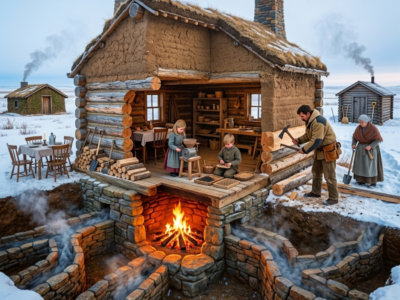
By late April, the thaw began. The thick, rock-hard shell of frozen clay around her cabin softened, and the rhythmic drip of melting ice filled the air. The snowpack receded, revealing patches of brown earth and green shoots.
One bright Tuesday morning, while standing on her porch, Cora heard a faint mechanical drone echoing down the valley. Her heart raced as she strained to listen. It was the DeHavilland Beaver, and Arthur Pendleton was back.
As the plane splashed down on the newly thawed water, Cora walked down the embankment. She moved with a calm grace, a woman who had learned to belong to the environment. When Arthur stepped out of the plane, he was stunned. Cora looked vastly different—weathered, strong, and resilient.
“I came to collect your remains,” he said, shocked at her transformation. But Cora smiled, looking back at her cabin. It was her armor, her crucible.
“I learned how to build,” she replied simply. “And I learned how to breathe.”
Cora’s incredible tale of survival against the brutal Alaskan elements had changed her forever. She had faced the worst the wilderness had to offer and emerged stronger, a testament to the unbreakable human spirit.
As they stood together, the sun shining down on the thawing valley, Cora realized that survival wasn’t just about the gear you packed; it was about resilience, adaptability, and the unwavering will to keep going even when every choice felt uncertain.
With a newfound strength and clarity, Cora was ready to embrace whatever came next, knowing that she could face it all.