(Part 2) She Pulled a Broken Wagon Into a Rock Hollow and Sealed Every Gap — The Blizzard Skipped Right Over
(Part 2) She Pulled a Broken Wagon Into a Rock Hollow and Sealed Every Gap — The Blizzard Skipped Right Over
.
.
Part 2: The Journey Ahead
She dug at the packed snow near the lower edge of the wagon bed. Her fingers burned as feeling returned. Snow fell inward in chunks, and white brightness spilled through the opening. The mule lifted its head, sudden light flooding the space. Elsa crawled through the gap first. The world outside had no lines, no trail, no ridge—just smooth white stretching to the horizon.
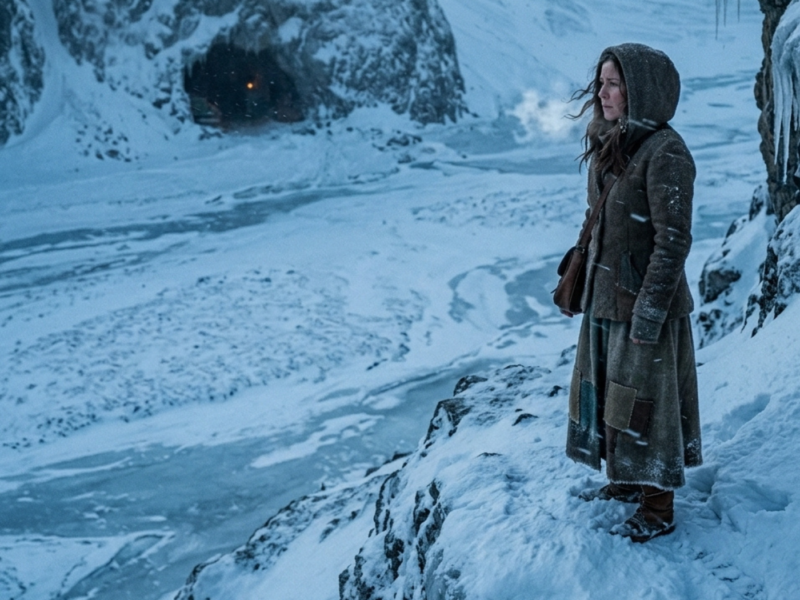
Four feet deep against her wall, the wagon bed was almost buried. Only the top rail was visible. The hollow blended into the bluff as if it had never been touched. The storm had passed, skipped over. She stood there, breath rising straight up into air that did not move. Cold enough to sting, but not stealing. Behind her, in the small dark space she had sealed with grass and rope and torn canvas, warmth still lingered in the stone.
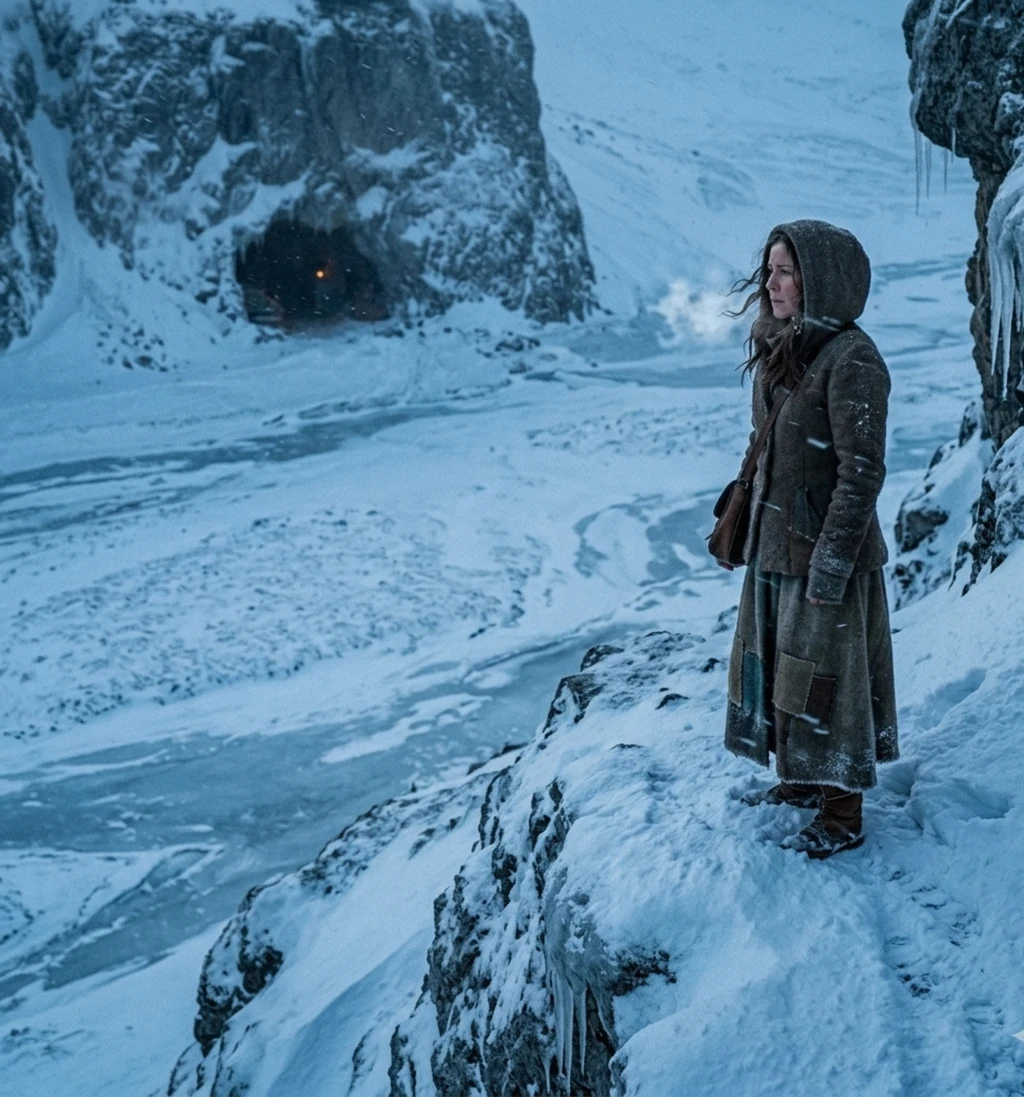
She looked back once, then began digging the rest of the entrance clear. There were 60 miles left, and now there was nothing but white between her and them. The first step away from the hollow felt wrong—not dangerous, just wrong. The ridge she had followed for six days was gone. No wagon tracks, no mule prints, no grass bending to mark direction—only white rising and falling in smooth curves.
Elsa shaded her eyes and looked east. The sun sat low and pale, barely clearing the horizon. She watched it long enough to fix its position in her mind, south and slightly east. That would be her line. She led the mule slowly, each step breaking the crust. The snow was up to her knees in places. The animal’s flanks were hollow from the long night, but its breath remained steady. They did not hurry; hurry wasted strength. Strength was currency now.
By noon, the brightness hurt her eyes. The land shimmered white against white. Twisting her eyes closed, she counted her breaths, letting the shape of the sun settle again behind her lids. She spoke to the mule once in Norwegian, a short word, “Move.” The silence across the plain was thick enough to press against her ears—no birds, no wind, no distant wagon wheels—just the crunch of snow under her boots.
Late in the afternoon, she found the first marker—a fence post barely visible above the drift, wood dark against snow. She brushed it clear with her mitten and felt the rough grain. Buffalo lay south of this line. Adjusting slightly, she kept walking. That night, she did not build walls. Instead, she dug a shallow trench in the lee of a low drift, laid the blanket down, and shared space with the mule again.
The air did not move. Cold settled heavy, but honest. She woke twice to check the animal’s breathing. Each time, steam rose straight up. That was enough. On the second day after the storm, she found a frozen creek, the ice thick and blue. She broke it with a rock and let the mule drink. Her own water was nearly gone. She filled the canteen and tucked it inside her coat once more. Her lips were cracked now, and her hands split at the knuckles, but her steps remained even. She did not look back; there was nothing to see.
On the fourth morning, she spotted smoke—a thin gray ribbon lifting into clear air not far, maybe a mile away. Her pace did not change. She walked the same steady rhythm until the shape of a cabin formed from the white, then a barn, then a fence line almost buried to its top rail. Her brother stood in the yard, splitting wood. He lifted the axe again before noticing her. The sound of iron striking wood stopped mid-swing.
He lowered it slowly, not waving or running, just standing very still. Elsa stepped through the open gate, leading the mule, snow falling from its mane, her coat stiff with frost, her eyes red from glare and cold. They faced each other across ten paces of yard. He crossed the distance first, taking the mule’s rope without speaking. His hands pawed at the leather harness, empty. He looked at her hands, raw, then at her face. She nodded once.
He turned and led the mule toward the barn. She followed him into the house. The door closed behind them with a dull wooden thud. Inside, it smelled of pine smoke and iron stove heat. Her brother pulled a chair near the fire. She sat, not leaning back, just holding her hands out toward the warmth. He poured water into a tin cup and pressed it into her fingers. They shook once before steadying. He waited.
She told him about the hollow, about the wagon bed, about packing grass until no light showed through. She did not describe the sound. He listened without interrupting. When she finished, he looked toward the stove flame, then back at her. “You let it go around you,” he said quietly. She did not answer. Outside, snow slid from the barn roof in a heavy sheet. The sound thumped against the yard and broke apart.
Elsa watched steam rise from her sleeves as frost melted. She flexed her fingers; they moved. That was enough. Four days later, travelers reached Buffalo with news from the trail. Wagons were found overturned, men frozen upright against saddles, horses stiff in harness. Names were spoken low near the stove. Her brother looked at her across the room when he heard the count. She did not lower her gaze.
Weeks later, when the snow softened and the first brown lines of earth showed through, riders passed near the ridge where she had built her wall. They saw only drifted stone and white—nothing to mark what had stood there. The wagon wood would rot, the rope would fray into soil, and the grass would return to dust. The hollow would remain, empty again.
Elsa stepped outside one evening as the sky turned copper over the plains. Wind moved lightly through the yard— not a roar, just air passing by. She stood still and let it touch her coat. It did not push. It did not take. It moved around her. She watched it go, knowing that the journey ahead would be just as challenging, yet she felt a glimmer of hope. The world was vast, and she had survived the storm. What lay ahead was uncertain, but she was ready to face it.