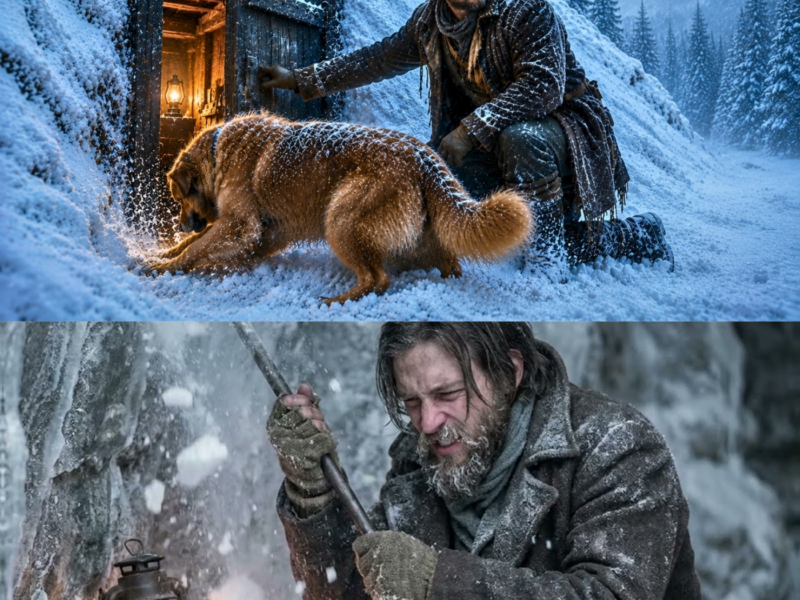
(Part 2) His Dog Barked at the Hill — Then He Found a Hidden Shelter with Enough Food to Survive the Winter
(Part 2) His Dog Barked at the Hill — Then He Found a Hidden Shelter with Enough Food to Survive the Winter
.
.
Part 2: The Hidden Shelter
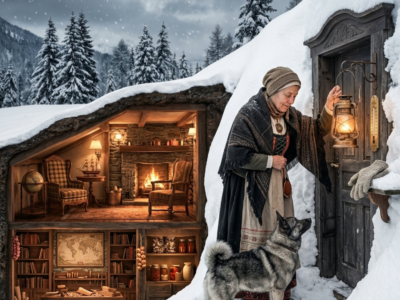
The roar of the blizzard vanished almost completely. Darkness swallowed the passage until Tobias struck a match with shaking fingers. The small flame revealed stone steps descending into the hill. Cedar support beams lined the narrow passageway. Packed earth walls rose on both sides, dry despite the storm raging outside. The tunnel extended deeper underground than Tobias expected, disappearing beyond the weak orange glow of the match.
Brindle moved ahead first, but the dog did not growl, did not hesitate. That mattered. Animals sensed danger faster than men buried it beneath reason. Tobias followed carefully down the steps while the smell of dry earth and old wood slowly replaced the smell of snow and wind. Then the tunnel widened suddenly into a chamber far larger than any storm shelter had a right to be.
The chamber beneath the hill looked less like a hiding place and more like preparation made solid. Shelves covered the walls from floor to ceiling. Thick wooden shelves, hand-built and reinforced against weight. Every row held food—glass jars filled with preserved beans and carrots, strips of salt pork hanging from iron hooks overhead, barrels of rye sealed with waxed cloth, potatoes packed carefully in ash to slow freezing, dried apples tied in bundles near the ceiling beams, navy beans stored inside heavy canvas sacks coated against moisture. Nothing had been thrown here in panic. Everything had been measured, placed, protected.
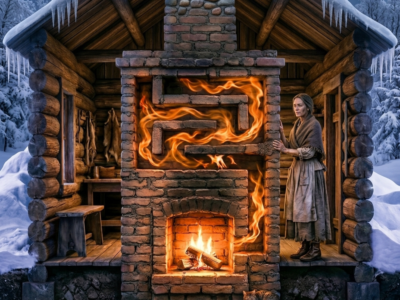
At the center of the chamber stood a small cast-iron stove connected to a stovepipe that disappeared into the stone above. Behind it rose a thick limestone wall darkened slightly by years of stored heat. Beside the stove sat neatly stacked cedar firewood covered beneath oil-treated canvas. Dry wood. That alone nearly stunned Tobias. Outside, half the valley would already be fighting damp timber before winter fully arrived.
Brindle crossed the room slowly, sniffed once near the stove, then lowered himself onto the packed earth floor with a tired groan. The dog had stopped trembling. Tobias moved deeper into the chamber with the caution of a man entering a church abandoned by time. The shelter smelled faintly of dry soil, old smoke, cedar oil, and preserved food. Human smells, built smells—someone had fought winter here before and fought it seriously.
Tobias picked up one sealed jar and turned it slowly near the weak match light. No frost inside, no spoilage, no cracked glass. Then he looked back across the shelves again and finally understood the scale of what stood beneath the hill. This was not a temporary refuge. Whoever built this place had prepared to survive an entire winter underground if necessary.
Tobias forced himself to think in order: shelter first, fire second, emotion later. That was how men stayed alive once winter cornered them. He knelt beside the cast-iron stove and inspected it carefully before touching the wood pile. Old ash still rested inside the firebox. Dry ash, good sign. He checked the stovepipe connection next, then looked upward toward the dark ceiling where the exhaust shaft disappeared into the hill. No obvious collapse, no heavy moisture, still usable.
Besides the stove sat split cedar kindling stacked beneath oil canvas, protected from dampness with almost obsessive care. Tobias fed a few pieces into the stove, struck a match, and waited. The fire caught quickly. For a moment, everything worked perfectly. Smoke pulled upward through the pipe exactly the way it should. Then, the draft suddenly failed. A thick wave of smoke rolled back into the chamber ceiling and spread across the room in dark layers.
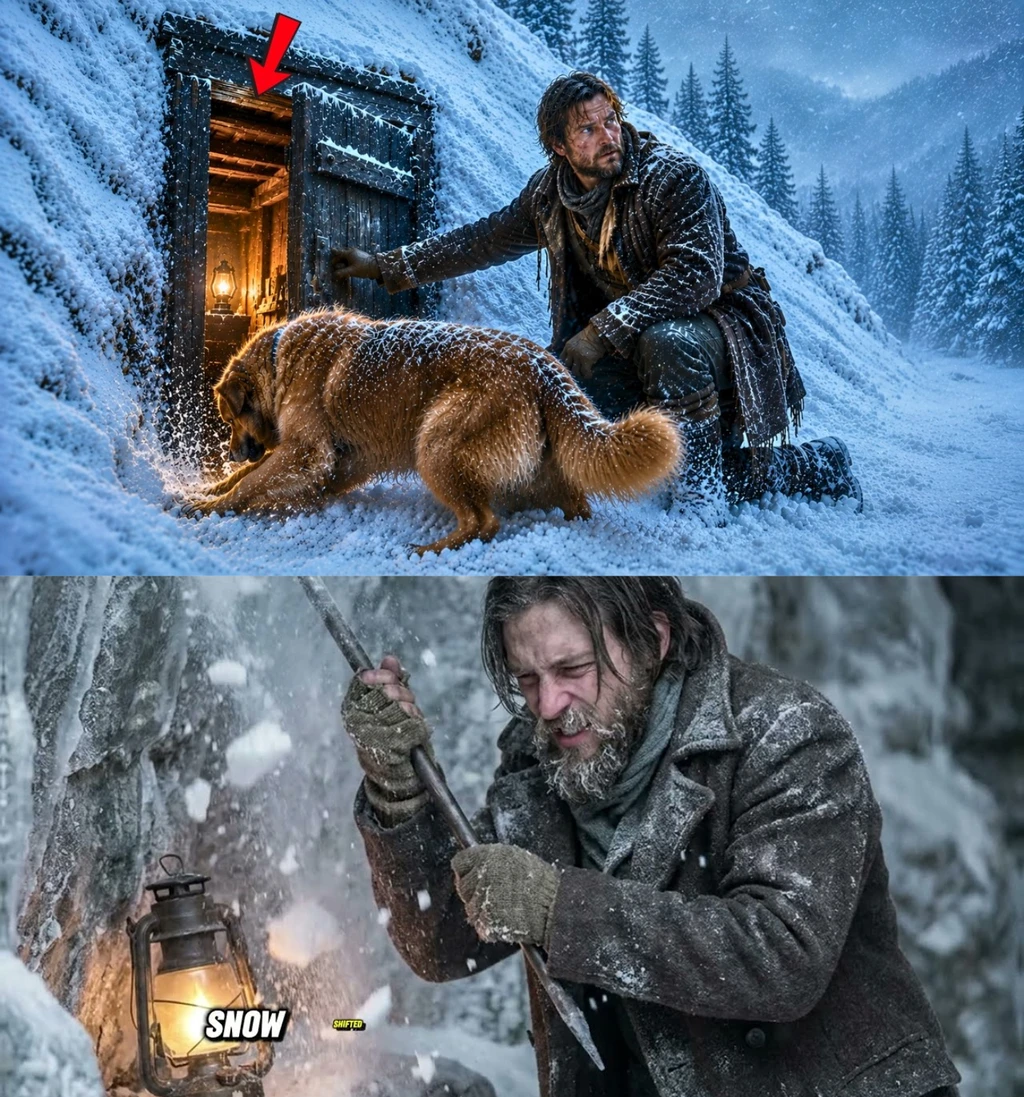
Brindle jumped to his feet immediately and growled toward the upper shaft. Tobias reacted fast. Not panic. Movement. He grabbed the lantern, climbed onto a storage crate, and held the light upward near the ceiling vent. Snowmelt dripped slowly from one side of the shaft opening. Blocked airflow—partially sealed by drifting snow outside. Tobias found an iron rod hanging near the wall and shoved it upward into the narrow vent passage. Ice cracked loose somewhere overhead. Snow shifted. Cold air suddenly rushed downward through the intake with enough force to flicker the lantern flame sideways.
Then the stove changed sound. The draft caught again. Smoke pulled hard into the pipe and vanished upward where it belonged. A few minutes later, steady heat began spreading slowly across the packed earth floor and limestone wall behind the stove. Not dramatic warmth, not comfort, but the kind of controlled heat built by someone who understood exactly how winter killed careless men. Only after the fire settled into a steady burn did Tobias finally remove his boots. Steam rose slowly from the soaked leather as he set them near the stove. His feet ached hard enough to pulse beneath the skin, while warmth gradually returned to his toes in sharp, painful waves.
Across the chamber, Brindle had already curled himself against the limestone wall behind the stove. The dog was asleep within minutes, breathing slowly for the first time since leaving the farm. Tobias opened one of the sealed jars from the shelf—navy beans, then a hard piece of rye bread, and a strip of smoked salt pork. Simple food, ordinary food. But winter changed the value of ordinary things. Only people who had come close to freezing understood how precious unfrozen food could become.
Tobias ate slowly while studying the shelter around him. No frost lined the walls. No dampness gathered near the ceiling. The air remained dry despite the storm above them. And even the packed earth floor felt stable beneath his boots instead of frozen solid. That mattered. Large heat could fade quickly. Stable heat lasted. Whoever built this place understood the difference.
Tobias looked once more toward the shelves of preserved food and finally allowed himself a thought he had avoided since the storm began: he might actually survive the night beneath this hill. Tobias woke to silence. Not empty silence, but protected silence—the kind that only existed when several feet of earth, stone, and packed snow stood between a man and the storm trying to bury him alive. For a few moments, he simply lay there listening.
No wind pushing through cracks. No loose boards rattling. No ice forming along walls. Only the faint ticking sound of cooling iron from the stove. That alone told him something important. The shelter had held heat through the night. Tobias pushed himself upright and checked the chamber carefully before adding more wood to the fire. A thin layer of ice floated across the water bucket near the wall, but the bucket itself had not frozen solid. The potatoes stored in ash remained firm instead of rock hard. Even the old coals beneath the stove grate still carried trapped warmth. Slow warmth, steady warmth. That was the secret. Air changed fast. Earth did not.
Cabins standing above ground fought winter from every direction at once. Wind struck their walls all night long. Cold crept through boards, gaps, nails, corners. But down here, the hill itself absorbed change slowly. Tobias placed one hand against the limestone behind the stove and felt faint heat still resting inside the stone from the night before. Someone had built this shelter to work with winter instead of against it.
Later that morning, Tobias began inspecting the deeper sections of the shelter properly. The farther he moved into the hill, the more deliberate the entire structure became. Nothing underground had been built carelessly. A narrow drainage trench ran along the lower edge of the rear storage chamber to carry moisture away before it could collect beneath the floor. Large barrels rested on limestone blocks instead of directly on dirt, protecting grain from ground dampness.
Near the ceiling, Tobias discovered a second ventilation opening hidden behind smaller than the main shaft, but carefully positioned to keep air circulating through the deeper rooms. The shelter was not merely hidden; it had been studied, improved, refined by experience. Near the back wall, beneath a stack of folded oilcloth, Tobias found an old ledger wrapped in weathered canvas. The cover read only one name: Silas Bracken.
Tobias sat near the stove and carefully opened it. Most of the pages contained practical records written in thick carpenter’s pencil. Wood burned per day. Outside temperatures. Snow depth measurements. Notes on which foods lasted longest underground and which spoiled fastest once condensation formed. There were sketches, too—airflow directions, vent placement, draft corrections. Not the work of an inventor chasing cleverness, but the work of a man trying not to freeze again.
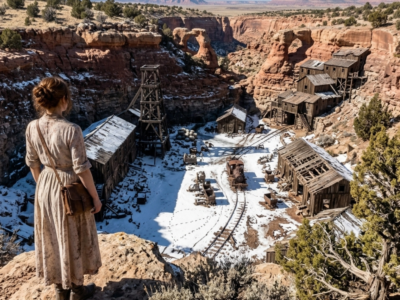
Tobias turned another page slowly and stopped reading for a moment. One line had been pressed harder into the paper than the others: “Cabins lose heat because winter touches every wall.” The deeper Tobias read into the ledger, the clearer Silas Bracken became. Not a miner. Not a hermit. A freight station keeper from the northern passes above Pine Kettle Ridge during the winter of 1873—the season later remembered by survivors as the Blue Star Winter.
Silas wrote about it plainly. That made the pages worse. No dramatic language. No self-pity. Only facts. Storage sheds above ground turned damp after repeated freeze-thaw cycles. Flour sacks absorbed moisture and hardened into useless blocks. Salt pork froze solid then spoiled once warmer air returned briefly through the cabins. Wind pushed through wall seams every night, no matter how much moss or cloth men stuffed between the boards. And always, the cold—constant, patient.
Silas lost his younger brother that winter after a supply run failed to return through the passes. Two draft horses froze standing in harness. By February, most of the men keeping the station alive had either abandoned it or died trying to reach lower ground. One entry stopped Tobias completely: “Built walls higher. Lost heat faster.” After that winter, Silas stopped trying to fight the mountains above ground. He started digging downward instead.
The shelter beneath the hill had not been built for comfort. It had been built to reduce exposure. Fewer walls for wind to touch. Less roof for snow to crush. More earth holding steady against sudden cold. The final lines on the page were darker than the rest, as if written under heavier pressure: “The earth keeps what it covers better than men do.”
Tobias sat quietly beside the stove for a long time after reading that sentence while the storm continued moving across the world above him. Two days passed before Tobias opened the shelter door again. Even then, he only cracked it several inches at first. Wind immediately slammed snow through the opening hard enough to scatter loose powder across the tunnel floor. The storm outside had grown worse, not weaker.
Tobias forced the door wider and climbed halfway up the buried entrance. The world beyond the hill had disappeared. Fence lines were gone beneath drifting snow. Pine trees stood as vague dark shapes inside the whiteout before vanishing entirely a few yards farther out. Wind swept across the ridge in long horizontal blasts that looked more like sandstorms than snowfall. No wagon could travel through this. No rider, either. A man caught outside without shelter