Banished as a Liar for Warning of an Early Winter Single Mom Turned a Cave Into a Lifesaving Refuge
Banished as a Liar for Warning of an Early Winter Single Mom Turned a Cave Into a Lifesaving Refuge
.
.
Part 1: The Early Warning
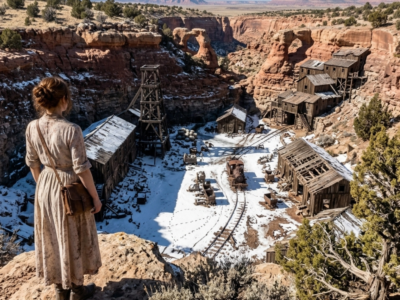
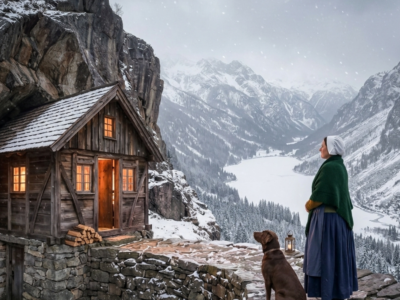
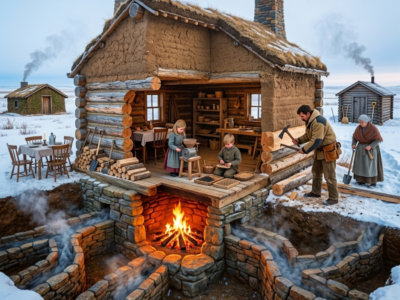
The chill of autumn crept over Prospect Creek, a small mining town nestled among the mountains. Agnes Carter stood alone on a rocky hillside, her gaze fixed on the sky as the last flock of geese vanished into the pale horizon. Their cries faded, leaving only the whispering wind behind. Something felt amiss, a disquiet that gnawed at her insides. The air had taken on a biting cold that belonged to December, not October. Yet down below, life in the town continued as if nothing were wrong. Smoke curled lazily from chimneys, men laughed outside the general store, and children played in the streets.
Agnes’s eyes drifted to the valley below, where a group of deer moved unnaturally low on the mountain. She tightened her grip on her worn notebook, filled with meticulous observations collected over months: dates, temperatures, animal movements, and patterns that most people overlooked. Behind her, her seven-year-old son, Thomas, kicked a pine cone down the dirt trail, oblivious to the weight of the world pressing down on his mother.
“Are we going home now, Mama?” he asked, his cheeks flushed from the cold. For a moment, Agnes forgot about the deer, the geese, and the unease that settled in her chest. She smiled, and Thomas nodded, racing down the hill after another pine cone.
But Agnes’s heart was heavy. Since losing his father in the mine collapse two years prior, Thomas had grown quieter and more somber. The world had stolen something precious from them both, and it had never returned. Later that evening, as Thomas slept beside the small stove in their cramped quarters, Agnes sat under the dim glow of a lantern, poring over her notes. Outside, the wind howled against the walls, and she turned page after page, each observation leading her to the same conclusion: winter was coming early, and it would be harsh.
The next morning, armed with her notebook, Agnes walked into town. The streets buzzed with activity, but she felt like an outsider. She crossed to the town hall, where Mr. Sterling, the owner of the mine and the wealthiest man in Prospect Creek, sat behind his large oak desk. His indifference was palpable as she approached.
“I think winter is coming early,” Agnes stated, her voice steady despite the flutter of nerves in her stomach. Mr. Sterling sighed before she could finish. She opened her notebook, pointing to her meticulous records of migration patterns, frozen creek edges, and the unusual behavior of the animals. But he merely leaned back in his chair, a dismissive smile curling on his lips.
“Do you believe squirrels can predict the weather?” he chuckled, his laughter echoing coldly around the room. Agnes stood her ground, replying, “I believe nature notices things before we do.” But her words fell on deaf ears, and Sterling waved her off, insisting that the town would follow the normal harvest schedule.
As she stepped outside, a chill swept through the street. Whispers followed her as townspeople exchanged glances, some shaking their heads, others laughing. By sunset, the entire town knew of the widow who thought she could predict winter, and Agnes felt the weight of their ridicule.
Three days later, she climbed the northern ridge one last time, the sky bright yet unyieldingly cold. As she stood there, she noticed a long crack hidden between the limestone cliffs, partially concealed by twisted juniper trees. Approaching it, she saw a faint ribbon of vapor drifting upward from the opening. Picking up a smooth black stone nearby, she felt warmth flow through her fingers, a stark contrast to the biting cold surrounding her.
Agnes stared at the stone, the wind howling across the ridge, and for the first time in weeks, she felt a flicker of hope. The mountain seemed to be trying to tell her something, and she knew that whatever it was, it might be the only thing standing between her son and death.
Part 2: The Journey into the Unknown
The town meeting was packed, the flickering lantern light casting shadows on the rough wooden walls. Agnes stood near the back with Thomas, the weight of her notebook heavy in her hands. Mr. Sterling stood confidently at the front, discussing harvest schedules and supply deliveries, his voice booming over the crowd. When he finished, Agnes rose from her seat, and the room fell silent, not out of respect, but out of curiosity, the kind that precedes laughter.
She spoke clearly, detailing the deer moving down from the mountains, the frozen edges of the creek, the beavers building unusually high dams, and the birds leaving weeks ahead of schedule. She opened her notebook, showing her records, but instead of concern, laughter erupted. Mr. Sterling led the mockery, and the room filled with scattered chuckles and jeers. Agnes stood motionless, the amusement stinging more than she anticipated.
The meeting ended, and laughter echoed in her ears as she walked home. The next week brought calm weather, bright skies, and mild afternoons, seemingly proving Sterling right. But then one afternoon, a knock at her door shattered the fragile peace. Two men stood outside, their expressions grim.
“You’ve been ordered to leave,” one of them said. “Town council decision.” Agnes stared in disbelief. There was no council; everyone knew who made the decisions in Prospect Creek. The men exchanged uncomfortable glances, delivering the message that she was accused of spreading panic and damaging morale. She had one hour to gather her belongings and leave town with her son.
Thomas looked up at her, his voice barely above a whisper, “Where do we go?” Agnes glanced toward the window, beyond the rooftops, beyond the hills, toward the hidden crack in the mountain, toward the warm stone resting in her pocket. She didn’t have an answer, but she had a direction. And sometimes that was enough.
Before sunset, they set out on foot, leaving behind the town that had turned its back on them. No wagon, no horse, only a few biscuits wrapped in cloth. The townspeople watched from porches and windows, some looking uncomfortable, others relieved. No one stepped forward to help. As darkness settled over the hills, the first night nearly broke them. A shallow rock overhang offered little protection, and the wind found every gap in their clothing.
Thomas curled beneath the blanket, trembling with cold. Agnes pulled him close, giving him every bit of warmth she could muster. The stars above felt sharp enough to cut through the sky, and hours passed without sleep, only the cold and the waiting. The second day was worse—hunger gnawed at them, and their water ran out. The frozen creek forced Agnes to smash through the ice with her bare hands, the freezing water burning her skin.
By afternoon, her fingers had turned pale and numb, and Thomas stumbled beside her, his cough growing deeper. They pressed on through the unforgiving terrain, each step a battle against exhaustion. Late that evening, they found another rocky shelter. Thomas fell asleep almost immediately, but Agnes sat beside him, counting every breath, her thoughts drifting back to Prospect Creek.
Maybe she should return. Maybe pride was less important than survival. The thought lingered until her hand brushed against the warm stone in her pocket. It was still warm, a tiny source of heat in the frigid world around them. Agnes pulled it out, staring at it, and suddenly her despair shifted toward a question: Where had it come from? Why was it warm?
The memory of the hidden crack returned. The next morning, despite every muscle aching, Agnes pushed forward. Thomas walked beside her, determined despite his weakness. The climb stretched on for hours, but finally, she spotted the narrow crack in the limestone cliff, just as she remembered. A thin ribbon of vapor drifted upward, and her pulse quickened.
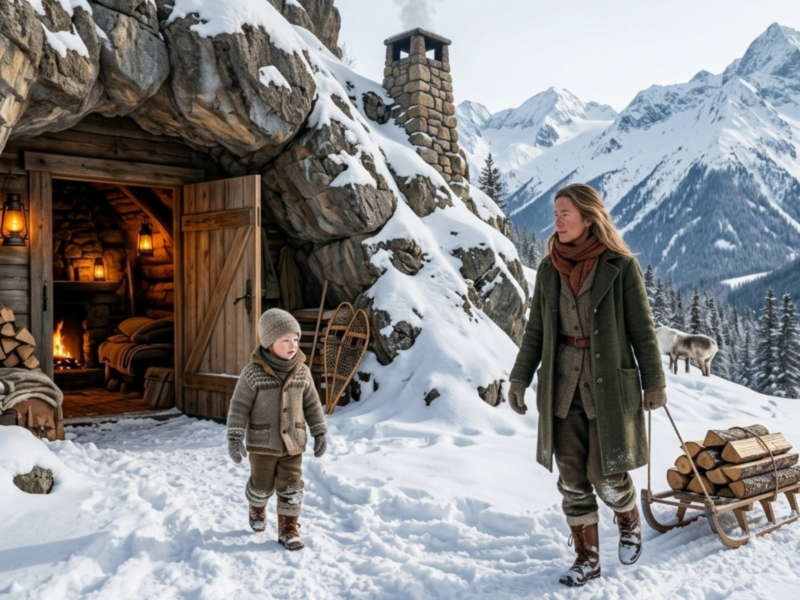
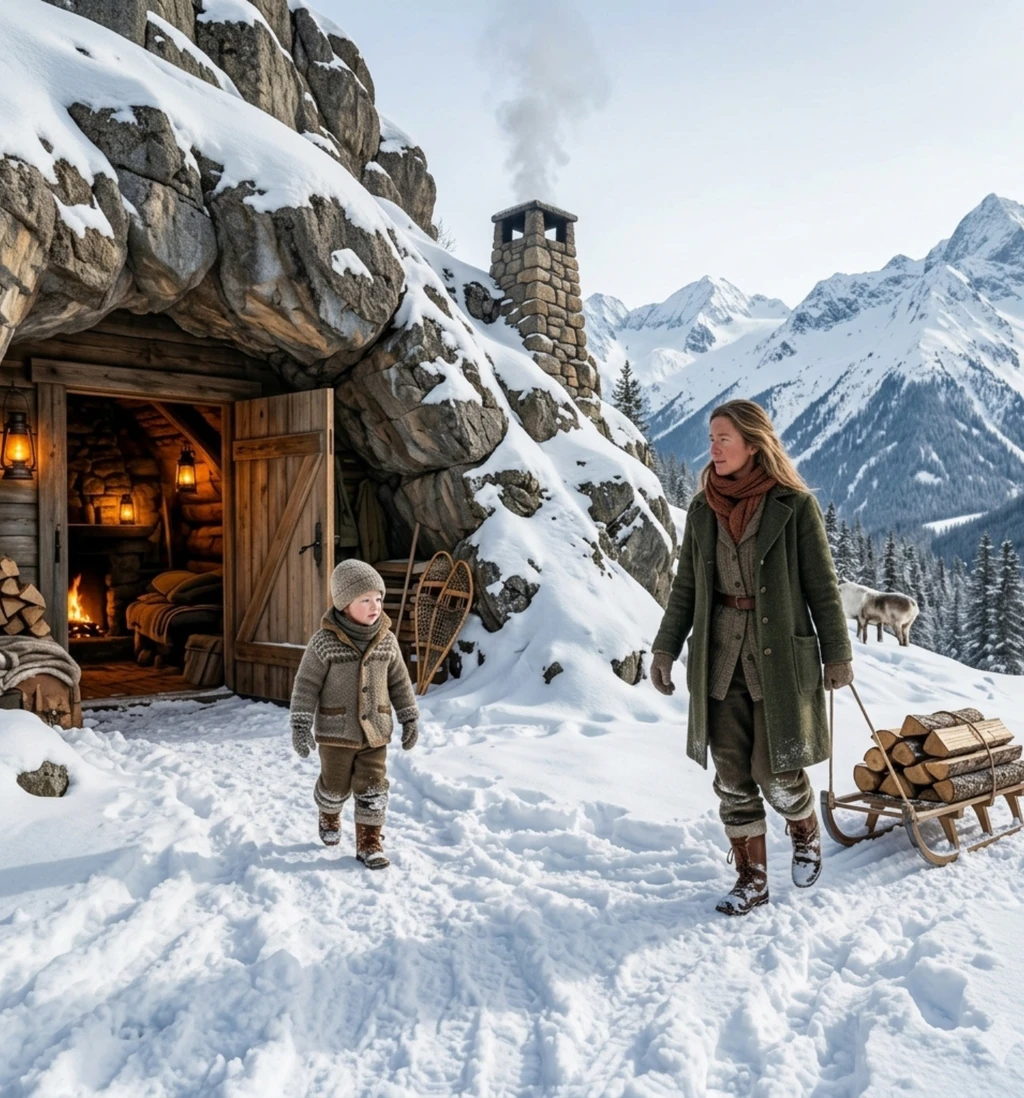
Agnes squeezed through the opening, pulling Thomas behind her. The change was immediate; the wind vanished, and the bitter cold disappeared. They moved deeper into the cave, where the passage sloped gently downward, and Agnes felt the temperature rise with each step. Soon, they discovered moisture glistening along the stone walls—warmth emanating from the rock itself.
Thomas dropped to his knees, drinking from a small natural basin filled with fresh water. Agnes joined him, savoring the cool, mineral taste. For the first time since leaving town, hope blossomed within her. They had found shelter, water, and warmth—everything they needed to survive.
Part 3: A New Beginning
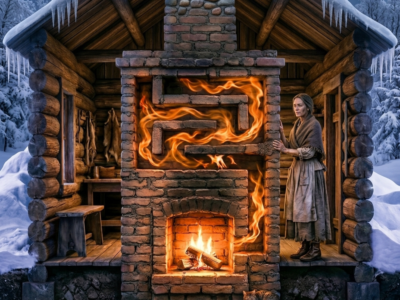
The following weeks became a battle of survival. Each day began before dawn and ended beside a small fire. Agnes built a stone hearth beneath a natural crack in the ceiling that allowed smoke to escape. She gathered branches, set snares, and collected clay to make tools. Nothing came easily; every effort required determination.
Thomas helped wherever he could, and together they turned survival into a routine. Then Agnes discovered something extraordinary: near the warmest section of the cave, the soil never froze. Even during the worst cold, it remained soft and dark. An idea sparked in her mind. She opened the small pouch she had protected since leaving town—seeds from her old garden.
Days passed as she planted kale, carrots, radishes, and a few precious tomato seeds. But soon another problem arose: no sunlight reached the garden. Most people would have given up, but Agnes was not most people. While digging clay, she found thin sheets of shining mica inside the limestone walls. The pieces reflected light, and for days, she experimented, creating a chain of reflectors until pale sunlight finally reached her hidden garden.
Weeks later, tiny green shoots pushed through the soil, and Thomas spotted them first, his voice echoing with excitement. “Mama, look!” Agnes hurried over, her heart swelling with pride. Outside, winter tightened its grip on the mountains, but inside the cave, life thrived.
Then came the blizzard—a storm that swallowed the valley in chaos. For three straight days, snow buried the world outside, while deep within the cave, the fire crackled steadily. The warmth from the rock never failed, and the spring continued flowing, nourishing the garden.
One afternoon, after the storm finally passed, an unexpected visitor appeared—a half-frozen old trapper named Jed Walker. He stumbled into the cave, expecting mere shelter, but instead found a thriving garden in the middle of winter. He stayed several days, and when he left, he carried a basket of vegetables, leaving behind tools, salt, and knowledge in return.
Word spread slowly at first, then quickly. Families from Prospect Creek began to seek her out, not for charity but for trade. Agnes’s garden became a lifeline, and soon, the townspeople who once mocked her now respected her.
Months later, another visitor appeared at the cave entrance—Mr. Sterling, the man who had banished her. His face looked older, his shoulders lower, and behind him stood the town preacher. Several children in Prospect Creek had fallen ill, and fresh vegetables were desperately needed.
Agnes listened quietly as Sterling struggled to find the words. She did not ask for an apology; the situation was simple. Children needed help, and she had the means to provide it. As they worked together, filling baskets with kale, carrots, and turnips, Sterling observed the cave, the garden, and the ingenuity that had turned her hidden world into a sanctuary.
At last, he removed a worn journal from his coat—David’s journal, the one she thought lost forever. He handed it to her without a word, and Agnes accepted it, understanding that nothing more needed to be said.
Years passed, and the cave continued to grow. The gardens expanded, and families learned from Agnes. Travelers came from distant settlements, and no one called her a liar anymore. They called her the woman who saw winter before anyone else.
When great storms struck the region, food from her underground gardens fed hundreds long after her hair turned gray. On a quiet spring evening, Agnes sat beside her first garden plot, a bowl of seeds resting in her lap. Children’s laughter echoed through the cave, and fresh green shoots covered the soil before her.
As she watched them sway gently in the lantern light, she listened to the sound of a thriving world that had begun with one ignored warning, one warm stone, and one mother who refused to stop paying attention. In that moment, she understood the power of resilience, the strength of community, and the importance of listening to the whispers of nature—reminders that life, even in its harshest forms, always finds a way to flourish.